
When I left the partial hospitalization program at Midwest Recovery Center, I thought that was it. I had done the work. Showed up every day. Dug deep. Said the hard things. Sat in the uncomfortable truths.
And when my time was up, I was proud. Nervous, but proud.
I walked out with a folder full of aftercare suggestions and a head full of insight. I told myself I’d stay grounded. That I had the tools now. That I could manage my recovery on my own.
And for a while, I did.
But no one tells you how quietly the disconnection can creep in. How it’s not always about relapse or chaos—it’s more subtle than that. You’re still sober. Still showing up. But it feels flat. Numb. Like the life you worked so hard to rebuild is now something you’re just passing through.
That’s where I found myself. Not in crisis. Not on the verge of using. But hollow. Spiritually tired. Quietly drifting.
And that’s when I realized: just because I left the program doesn’t mean it left me. Everything I learned in PHP was still there—waiting. Still true. Still mine.
That Hollow Feeling Isn’t a Sign You’ve Failed
I used to think being stuck meant I must have done something wrong. That if I was “doing recovery right,” I’d feel alive and full and emotionally clear all the time.
But that’s not how it works.
Recovery isn’t a constant upward climb. It’s waves. It’s maintenance. It’s noticing when you’re going through the motions and choosing, gently, to stop and listen.
I didn’t feel like I was failing. I just didn’t feel anything.
I was checking the boxes—job, home, routines—but I was disconnected from all of it. And eventually, I had to admit: I didn’t want to feel numb. I wanted to feel real again.
PHP Didn’t Just Help Me Get Sober—It Taught Me How to Return
When I was in the program, I remember one of the counselors saying, “You’re going to leave here, and life will test everything you’re learning. That’s not failure. That’s the real work.”
I didn’t fully understand it at the time. But now? I do.
Because it’s one thing to get through a program. It’s another to carry those lessons into the messiness of everyday life—months and years later.
What I realized is that I didn’t need to re-enter PHP in a formal way. I just needed to reconnect with the practices I had learned there. The honesty. The structure. The willingness to ask for help without waiting until I hit a wall.
And if I did need to return more formally, I knew the door was open.
The Smallest Tools Were the Ones That Stuck
It wasn’t just the big therapeutic breakthroughs that stayed with me—it was the small, steady rituals we built in PHP.
- The daily check-ins: Where am I emotionally, physically, spiritually?
- The grounding practices: A few deep breaths before I speak.
- The group honesty: Saying the hard thing out loud, even when it’s messy.
Those habits felt minor when I first learned them. But now, they’re anchors. Even when I forget for weeks at a time, I know they’re there—waiting for me to come back.
Recovery Doesn’t Expire—And Neither Does Support
One of the hardest parts of long-term recovery is the quiet assumption that you should be “fine by now.”
That assumption is what keeps so many of us from speaking up when things get dull or dark or flat. We think, “It’s been a year. Two years. I should have it together.”
But the truth? Time doesn’t make you immune from struggle. In some ways, it makes the disconnect sneakier.
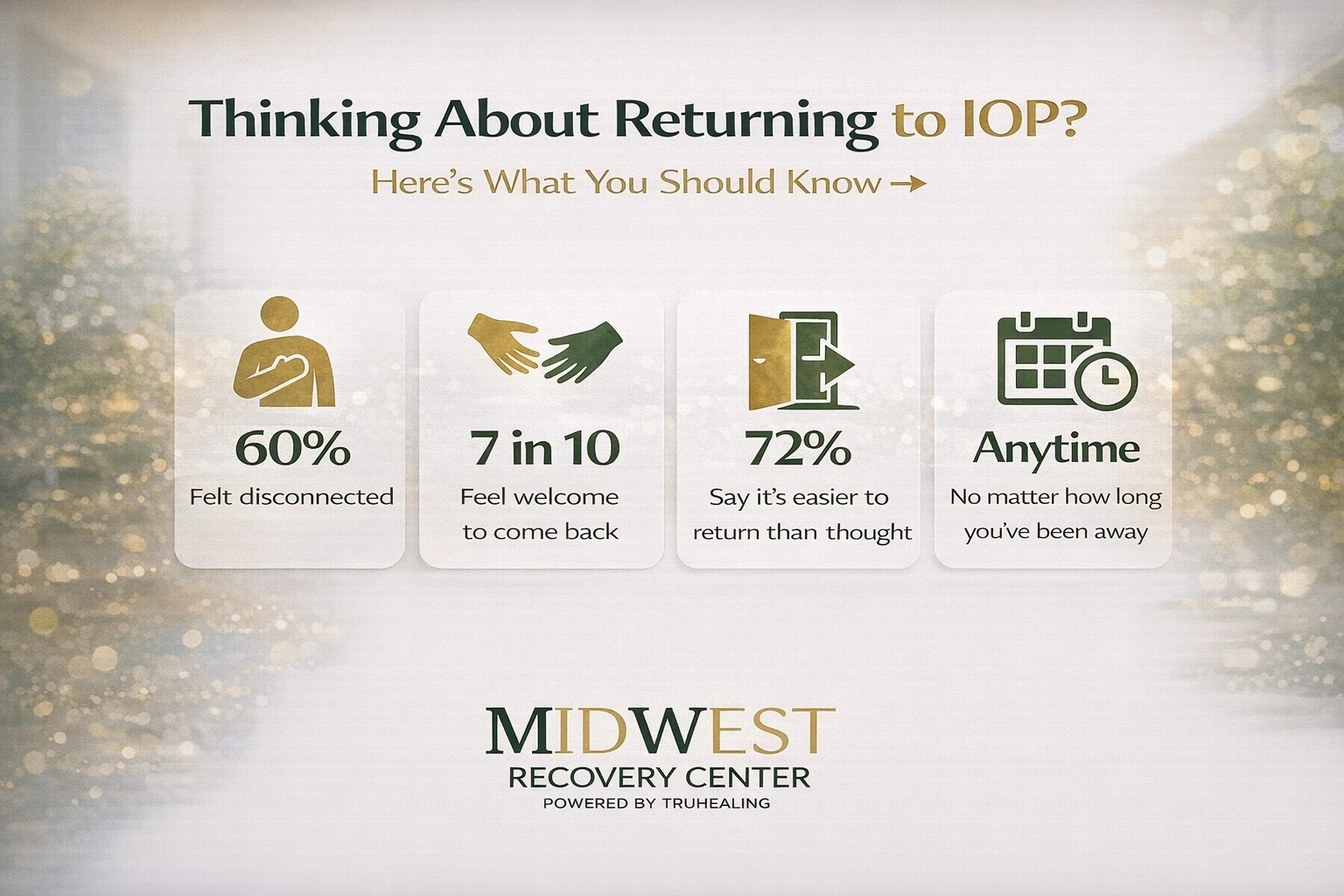
That’s why Midwest Recovery’s support doesn’t vanish after discharge. Whether you’re six weeks or six years out, you’re still part of something. You’re still allowed to reach out, to ask questions, to re-engage.
If you’re near Maumee, OH, that support is right here.
And if you’ve moved further away, the care you received—and the practices you built—are still inside you.
What It Looked Like to Reconnect—Without the Shame
Here’s what didn’t happen: I didn’t spiral. I didn’t relapse. I didn’t collapse in tears asking for help.
Here’s what did happen: I called. I said, “Hey, it’s been a while. I’m not doing badly, but I feel distant. Can I talk to someone?”
That was it.
No judgment. No lectures. Just a warm, calm voice saying, “Of course. Let’s figure out what would feel helpful right now.”
It didn’t have to be a full re-entry into PHP. It was just a conversation. And from that, I found clarity.
Sometimes, it’s not about going back to where you were—it’s about finding the next right step based on where you are now.
Frequently Asked: What Other Alumni Wonder Too
Do I have to be in crisis to reach out again?
No. In fact, we encourage alumni to reconnect before things get overwhelming. Emotional flatness, spiritual drift, or even just a lack of motivation are all valid reasons to ask for support.
Will I be asked to re-enroll in PHP if I reach out?
Not unless it’s something you feel would help. Our team works with you to figure out what level of support matches your current situation. Sometimes that’s individual sessions. Sometimes it’s a refresher group. Sometimes it’s simply talking things through.
What if I feel ashamed that I’m still struggling?
You’re not alone. Many long-term alumni feel stuck or emotionally distant at some point. That doesn’t erase your progress. You’re allowed to feel off and still be doing the work.
Can I access resources even if I’ve moved away?
Yes. While location-based services are centered in areas like Youngstown, our alumni support team can help you find virtual options or referrals near you.
What if I’m not sure what I need?
That’s okay. You don’t need to know. Just start the conversation. The act of reaching out often creates the clarity you’ve been missing.
Final Reflection: If You Feel Disconnected, You’re Not Broken
Recovery doesn’t stop when the paperwork does. And feeling stuck doesn’t mean you’ve failed.
Sometimes, it just means you’ve gone quiet inside—and it’s time to come home to yourself again.
For me, returning to the values and voice I found in the partial hospitalization program reminded me of who I still am. Not someone starting over. Someone starting fresh.
If that’s you right now—quietly wondering if you’re allowed to say, “I need something”—let this be your answer:
Yes. You are. And we’re still here.
Call (888) 657-0858 to learn more about our partial hospitalization program services in Toledo, OH.
You don’t have to wait until it’s urgent. You’re allowed to return—to your support, your strength, your next step—whenever you’re ready.