
The Gut-Punch of Relapse
Ninety days. That’s how long you worked for it. Ninety days of saying no, of showing up, of building new routines that felt shaky but possible. Ninety days where you let yourself believe recovery was real—not just for other people, but for you.
And then it happened. The slip. The thought: Just once. Just one more.
If you’re here reading this, you made it through that relapse. That fact alone means something. But you also know what too many people don’t realize until it’s too late: with opioids, relapse doesn’t just mean shame or disappointment. It can mean overdose. It can mean death.
That’s why relapse after opioid use is especially dangerous. And that’s why Midwest Recovery Center’s opioid addiction treatment in Toledo, Ohio is committed to walking with you through this moment. Because relapse doesn’t mean the story is over—it means you need support, right now, to keep going.
Why Relapse Is More Dangerous Than You Think
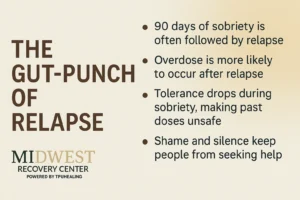
When you’ve been sober for weeks or months, your body changes. Your tolerance drops, even if your cravings feel the same.
The amount you once used to feel “normal” can now overwhelm your system. A dose that gave you a high before sobriety can now shut your body down completely. That’s why so many overdoses happen after relapse—it’s not because people want to overdose. It’s because their bodies are no longer able to handle what they once thought was “safe.”
Opioids are unforgiving. Even one use after a break can be lethal. That reality makes relapse not just emotionally devastating but physically life-threatening.
The Shame Spiral
Relapse doesn’t just hit your body. It hits your mind.
For many alumni, the shame that follows is brutal. You might hear the voice in your head saying:
You wasted everyone’s time.
You’re not strong enough.
You’ll never get it right.
Maybe you’ve avoided telling anyone—your sponsor, your family, even your peers from group. The fear of letting people down can make you hide. But silence is what keeps people stuck. Silence is what kills.
Speaking the words out loud—I relapsed—doesn’t erase your progress. It doesn’t strip away your 90 days. It brings you back into connection. And connection is what saves lives.
Why Opioid Addiction Treatment Still Matters After Relapse
It’s tempting to think, I’ve tried treatment. It didn’t stick. But treatment isn’t about being perfect the first time around. It’s about building skills, making adjustments, and coming back stronger after setbacks.
Here’s what opioid addiction treatment can give you if you return after relapse:
- Medical oversight: Ensures your safety if you’re at risk for withdrawal or overdose.
- Therapy: Helps you dig into why the relapse happened—whether it was stress, isolation, or overconfidence.
- Coping skills: Gives you concrete tools for managing cravings when they hit hard.
- Community: Connects you with people who’ve been there, who won’t judge, and who remind you that relapse isn’t the end.
- Accountability: Helps you re-establish routines that keep you grounded.
At Midwest Recovery Center, relapse isn’t a deal-breaker. It’s a signal that you need more support—not that you’re beyond help.
The Myth of “Just One More”
The most dangerous lie in opioid addiction is the thought: Just one more time.
One more pill to take the edge off.
One more hit to celebrate.
One more because no one will know.
But opioids don’t play fair. That “one more” can be fatal after sobriety. It’s not drama—it’s math. Your brain may crave the same amount, but your body can’t handle it anymore.
That’s why relapse after opioids is especially dangerous. It’s not weakness—it’s science. And that science is why you need treatment, not shame, after a slip.
Recovery Close to Home
You don’t have to do this alone—or far from home.
If you’re looking for opioid addiction treatment in Maumee, Ohio, or nearby in Perrysburg, Ohio or Oregon, Ohio, Midwest Recovery Center provides local care designed for alumni who need to re-engage after relapse.
Being close to home matters. It allows you to practice recovery in real time, within your actual life, while still having the support and accountability of structured treatment.
Stories of Returning Stronger
Many alumni relapse. That truth can feel discouraging, but here’s what’s also true: many of them come back—and come back stronger.
When alumni return to treatment after relapse, they bring insight with them. They know their triggers better. They recognize the moments when pride got in the way. They reach for support faster than before.
Relapse doesn’t erase progress. It refines it. And over time, those lessons add up to lasting recovery.
Breaking the Silence
If you’re reading this and hiding in shame, this is your invitation to break the silence. Call your counselor. Tell your sponsor. Text a friend. Reach for help before the next craving convinces you to try “just one more.”
Remember: relapse is survivable. Overdose isn’t. The difference often comes down to whether you reconnect with treatment in time.
FAQs
Why is opioid relapse especially dangerous?
Because after a period of sobriety, your tolerance drops. The amount you used to take can now overwhelm your system and cause overdose.
Does relapse mean I failed treatment?
No. Relapse is common in recovery. It doesn’t erase the work you’ve done—it simply shows you need additional support.
Can treatment help if I’ve relapsed multiple times?
Yes. Each return gives you more tools and insight. Many people find lasting recovery after multiple attempts.
What should I do right after a relapse?
Tell someone you trust, avoid using alone, and seek medical or treatment support immediately. Acting quickly reduces the risk of overdose.
Is there opioid addiction treatment near me in Ohio?
Yes. Midwest Recovery Center offers treatment in Toledo, serving communities like Maumee, Perrysburg, and Oregon, Ohio.
Take the Next Step
Relapse doesn’t mean your story is over. It means you’re still here—and that means you still have a chance.
Call (888) 657-0858 or visit opioid addiction treatment in Toledo, Ohio to re-engage with support before “just one more” becomes your last.
Because the truth is simple: relapse is part of recovery. Overdose is not.