
You didn’t fail. You paused. And that pause doesn’t disqualify you from trying again.
Maybe you ghosted your IOP program. Maybe you stopped showing up after week three, or made it halfway through and thought, I’m not like these people. Or maybe you were doing okay… until you weren’t. Then everything got quiet. And then it got loud again. And now you’re here.
Reading this doesn’t mean you’re weak. It means you’re curious. And that’s enough.
At Midwest Recovery Center in Toledo, Ohio, we see people come back to treatment every week after falling off, stepping away, or simply not being ready the first time. It’s not a red flag. It’s a sign you’re still in it.
Here’s how to re-enter an IOP and actually use it to build real-world skills—ones that stick when you’re outside the group room, back in your apartment, or staring at your phone in the middle of the night.
Walk Back In—No Speech Required
You do not have to explain where you went, why you stopped showing up, or what happened in the meantime. If all you can say is, “Hey, I think I’m ready to try again,” that’s more than enough.
Most people imagine they’ll need to walk back into IOP with a full apology, a progress report, and a neat little life update. You don’t. This isn’t a courtroom. It’s a space to restart, not to justify.
Even if you only lasted two sessions last time, the door is still open.
And if you’re looking for IOP near Maumee, Ohio or Perrysburg, Ohio, we’ve got your back. We know people pause—and we know how to help them come back.
Stop Performing. Start Practicing.
One of the biggest barriers for returning clients is this subtle pressure to “do it right” this time. Say the right things. Look engaged. Show up like you’re all-in, even when you’re not.
You don’t have to perform your recovery here.
What we do invite you to do is practice:
- Practice telling the truth (even if it’s awkward).
- Practice sitting in a room where people see you, even when you’d rather disappear.
- Practice asking questions instead of pretending you already know.
- Practice saying “I messed up” without also saying “I’m garbage.”
This is a space to try again without the threat of failing again. And every time you show up and practice something—not perfect, just practice—you build skills that carry outside the room.
Use Group as a Sandbox, Not a Stage
You don’t have to dump your whole life story in your first group back. Or ever, if you don’t want to.
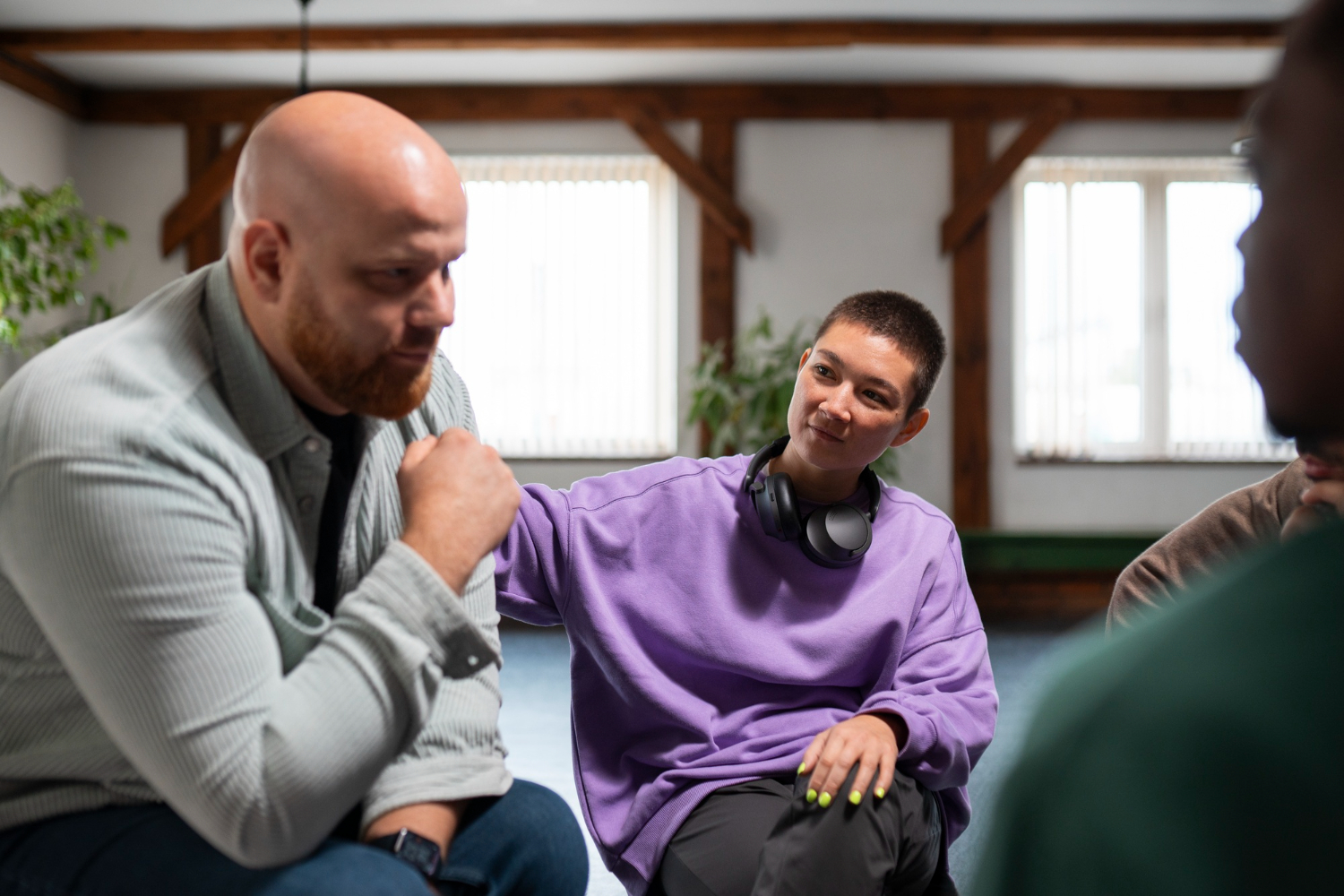
Think of group therapy not as a stage for dramatic revelations—but a sandbox to try out new ways of relating. It’s where you get to experiment with things like:
- Speaking up when you usually shut down
- Holding silence when you’d normally overshare
- Naming anger without burning bridges
- Owning shame without collapsing under it
It’s okay to show up awkward, offbeat, skeptical, or sad. That’s the point. Group is a lab for real-life behavior—not a confessional.
Translate Treatment Into Your Language
Let’s be honest—some recovery slogans, acronyms, and worksheets don’t always land.
You’re allowed to think “HALT” is cheesy. Or that journaling doesn’t work for your brain. Or that some mindfulness exercises make you feel more anxious, not less.
But before you throw it all out, try translating the skill into something that feels like yours:
- If journaling feels like homework, try voice notes.
- If “self-care” feels vague, try “basic maintenance I’d do for my car.”
- If “urge surfing” makes no sense, try “white-knuckling with breath for 90 seconds.”
You don’t need to do it their way. You need to find your way into the skill—so it sticks when no one’s watching.
Bring the Mess With You
Maybe you’re still using. Maybe your relationship is still toxic. Maybe you’re lying to people who think you’re doing better. Maybe you hate yourself a little for all of it.
Please know: You do not have to clean this up to come back to IOP.
This program isn’t for people who’ve figured it out. It’s for people who are willing to be honest about how messy it still is.
You are not a disruption. You are not a liability. You are not “too complicated.”
You’re a human in the middle of a storm. And we’re not asking you to explain the thunder. Just let us offer a dry place to stand.
If You Ghost Again, That’s Not the End Either
Here’s something most people don’t hear enough: if you leave again, you can still come back again.
Treatment is not a one-shot deal. It’s not three strikes and you’re out. It’s not a staircase you fall down and never get back up.
Sometimes the most powerful thing you can do isn’t staying—it’s returning.
Whether you’ve been gone a week, a month, or longer… we’re still here. No shame. No scolding. Just the same open door.
FAQs for People Who’ve Dropped Out (And Are Thinking of Coming Back)
Do I need to explain why I left the first time?
Nope. You can share if it helps you—but we won’t require it. You’ll be welcomed back without a performance.
What if I left weeks or months ago—is it too late?
Never. People come back to IOP after days, months, even years. There’s no expiration on being ready.
Do I have to be sober to restart IOP?
No. You don’t need to be “clean” to come back. In fact, showing up while you’re still using might be the most honest move you can make.
Can I work or parent while doing IOP?
Yes, many people do. We offer flexible scheduling to help IOP fit into your real life—not replace it.
Will insurance still cover it if I already used some sessions?
Usually, yes. We’ll check your benefits and tell you exactly what’s covered. No surprises. No guilt-tripping.
Can I switch from another program’s IOP to yours?
Absolutely. Whether it didn’t fit, you moved, or you just want something different—we’re here to help you transfer smoothly.
You Are Not a Quitter. You Are Still Here.
Let’s call it what it is: walking away from treatment once (or even more than once) doesn’t make you broken. It makes you someone who knows what didn’t work—and is still brave enough to ask what might.
You don’t have to be perfect to come back. You don’t have to explain your absence. You don’t have to impress anyone.
You just have to take a step. Maybe even this one.
Call (888) 657-0858 or visit IOP program in Ohio to reconnect. We’ll keep the light on until you’re ready.