
When you first hear the phrase “alcohol addiction treatment,” it can sound like a one-size-fits-all fix. Maybe you imagine clinical walls, pressure to take medications you’re unsure about, or losing some part of yourself in the process.
But here’s the truth: real recovery isn’t about changing who you are. It’s about helping you hear yourself again—clearly, without alcohol making all the decisions.
If you’re feeling scared, hesitant, or even just unsure of what your next step is, you’re not alone. At Midwest Recovery Center, we meet you exactly where you are—with curiosity, not judgment. Because recovery isn’t about rushing to feel better. It’s about learning to feel safely, in your own time.
Learn more about our alcohol addiction treatment in Toledo, Ohio, and what it can look like for you.
Treatment Begins with Permission to Be Honest
Before any plans are made, before any therapies are chosen, the first real moment of healing often comes when someone says: “You don’t have to perform here.”
Many people come into treatment with understandable fear. Fear of being told what to do. Fear of being medicated into feeling numb. Fear of being seen as broken.
But we don’t see broken. We see overwhelmed, exhausted, scared—very human things. Alcohol might’ve felt like the only thing that worked. We get that. So we don’t start by trying to take everything away. We start by helping you name what hurts.
Scared to Take Medication? That’s Not a Red Flag.
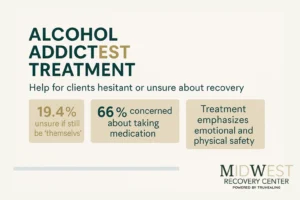
Not everyone in alcohol addiction treatment takes medication. And not everyone who does needs it forever. But if you’re feeling anxious about that part, it’s okay. You’re allowed to want to understand what goes in your body. You’re allowed to be cautious.
Medication is one tool—not the whole toolbox. Our approach centers your autonomy. That means we’ll talk through what medications are, what they do, and what they don’t do. There’s no “just take this and you’ll be better” script. There’s transparency, choice, and time to decide.
You can take your time. And you can say no. We’ll still be here.
Why Alcohol Addiction Treatment Feels So Different When It’s Rooted in the Body
For many, alcohol use becomes a way to cope not just with stress or trauma—but with the body itself. If you’ve ever felt like your body betrays you, or that emotions are too loud to manage, alcohol might have become a kind of mute button.
But that button doesn’t delete the feelings. It just delays them.
Treatment helps you tune back into the signals your body’s been trying to send. Hunger. Sadness. Anger. Exhaustion. Connection. Boundaries. These aren’t just emotional buzzwords—they’re physical realities. And as you begin to feel safer, your body starts speaking again. We help you learn to listen gently.
Sometimes the work is learning to eat when you’re hungry. Other times it’s letting yourself not be productive. That’s all part of recovery.
You’re Allowed to Ask: “Will I Still Be Me?”
This is one of the most common fears we hear, especially from people who are artistic, sensitive, empathic, or driven. The fear isn’t always about sobriety—it’s about what happens to your identity when alcohol is no longer part of it.
What if I become boring? What if I lose my edge? What if I don’t even recognize myself?
At Midwest Recovery Center, we don’t brush that fear aside. It’s real. It’s valid. And it’s one of the bravest things you can admit.
The good news? Recovery doesn’t erase your personality—it clears the static so you can hear yourself more clearly. Many people discover their creativity deepens. Their joy sharpens. Their relationships become more honest. But that only happens when treatment honors who you are—not who someone else wants you to become.
Listening to Your Body Is a Skill—And You Can Relearn It
You’re not broken because you don’t trust your instincts right now. That happens to a lot of people who’ve lived with addiction. When your days revolve around drinking, your body becomes something you manage—not something you live in.
In alcohol addiction treatment, you’ll begin to relearn things like:
- The difference between emotional discomfort and danger
- When your body is asking for connection vs. when it needs space
- What hunger, fatigue, and stress feel like before they reach crisis
It doesn’t happen overnight. But each week, each session, each quiet moment where you check in with yourself without numbing—those are victories.
You’re Not Too Far Gone, and You Haven’t Waited Too Long
Maybe this isn’t your first time wondering if you need help. Maybe you’ve Googled treatment before. Maybe you’ve tried to stop drinking and didn’t make it through the weekend.
That doesn’t disqualify you from recovery. It qualifies you for compassion.
It’s never too late to come back to yourself. And you don’t have to go all in overnight. Just taking one step—asking questions, reading this blog, calling to talk to someone—those count.
If you’re in Maumee, Ohio, or nearby in Perrysburg or Oregon, know that you’re not far from a place that will meet you gently.
What Real Support Looks Like at Midwest Recovery
We don’t believe in shaming. We don’t rush people through checklists. Our team includes professionals who understand the medical side and the emotional nuance of recovery.
You’ll find:
- Flexible outpatient schedules so you don’t have to choose between healing and your responsibilities
- Therapy that focuses on both past wounds and present patterns
- Clinicians who take the time to explain—not just prescribe
- Group sessions that create connection without pressure
- Respect for your pace, your questions, your “no” and your “maybe later”
Healing isn’t a straight line. We walk it with you.
FAQs: Alcohol Addiction Treatment and Your Body
Is alcohol addiction treatment always inpatient?
Not at all. Midwest Recovery Center offers outpatient options that allow you to live at home while attending therapy and support. It’s structured, supportive care—without the need to step away from your entire life.
Will I be forced to take medication?
No. Medication is a choice, not a requirement. If it’s recommended, we’ll explain why, what the risks and benefits are, and whether alternatives exist. You’re always part of the decision-making process.
What if I start and realize it’s not the right fit?
We welcome that kind of honesty. Treatment should fit you, not the other way around. If something doesn’t feel right, we’ll work together to adjust the plan. You’re allowed to speak up—and we’ll listen.
How long does alcohol addiction treatment last?
It varies. Some people attend for a few months, others stay involved for a year or more. We work with you to create a timeline that supports your goals, lifestyle, and healing process.
What if I relapse or miss a session?
We don’t punish people for being human. If you relapse, that doesn’t mean you’ve failed—it means something wasn’t working, and it’s worth exploring why. Our door stays open.
Call (888) 657-0858 to learn more about our Alcohol Addiction Treatment services in Toledo, Ohio. You don’t have to commit to everything today. Just reach out. Ask questions. Let yourself be curious about what healing might feel like—for you.