

There’s a weird kind of loneliness that happens when you’re the first person in your friend group to realize alcohol isn’t fun anymore.
Everyone else still seems okay with the hangovers. The blackouts become stories. The chaos becomes normal. People joke about needing drinks to survive stress, heartbreak, weekends, birthdays, concerts, breakups, and random Tuesdays.
Meanwhile, you’re secretly wondering whether alcohol is changing you in ways nobody else can see yet.
You may still look functional from the outside. Maybe you still show up to work or classes. Maybe your friends think you’re “fine.” But inside, something feels off. Heavier. Less manageable.
And if you’ve been searching for same-day detox support, you may already know something important:
You’re not just tired of drinking.
You’re tired of what drinking is doing to your mind, body, and life.
That realization can feel terrifying when you’re young — especially if nobody around you seems to understand it yet.
At Midwest Recovery Center, we’ve worked with many young adults who felt embarrassed, isolated, or “dramatic” for needing help early. Most eventually realized something powerful:
Getting honest sooner is not weakness.
Sometimes it’s the smartest thing someone does for themselves.
1. You Don’t Need to “Hit Rock Bottom” to Deserve Detox
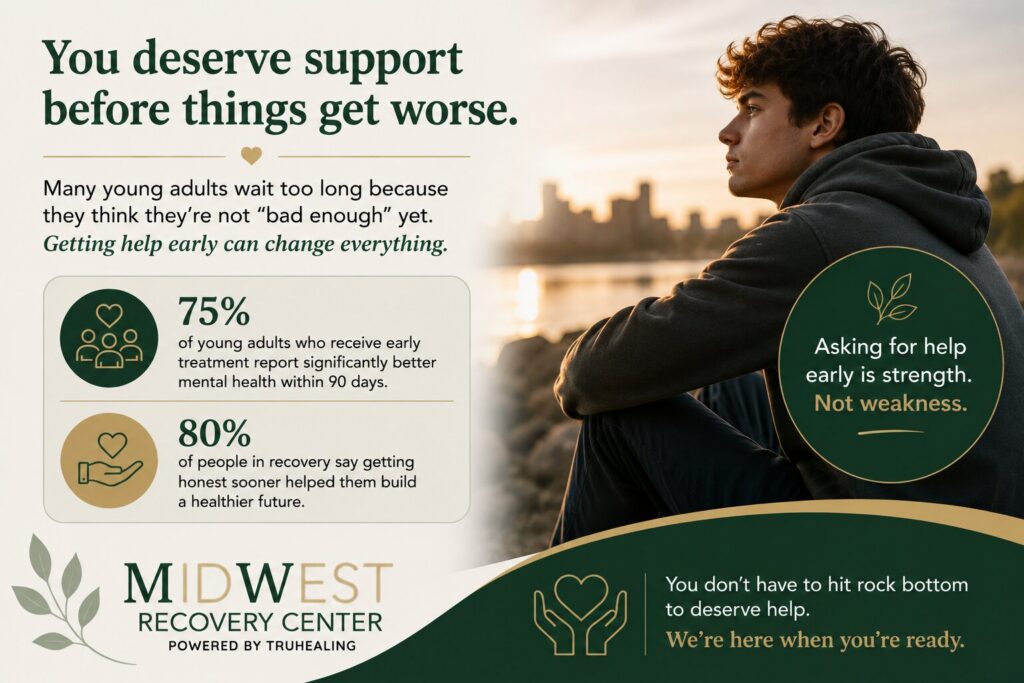
A lot of young people delay treatment because they think their life doesn’t look bad enough yet.
They compare themselves to stereotypes:
- “I still have a job.”
- “I’m not drinking every morning.”
- “Other people are worse.”
- “I haven’t lost everything.”
But addiction and alcohol misuse do not always announce themselves dramatically at first.
Sometimes the earliest warning signs look quieter:
- Anxiety getting worse
- Drinking becoming emotionally necessary
- Blacking out more often
- Using alcohol to cope with stress constantly
- Feeling unable to relax sober
- Promising yourself you’ll cut back, then not being able to
You do not need to completely destroy your life before support becomes valid.
2. Being the Only Sober Friend Can Feel Socially Brutal at First
This is one of the hardest parts for young adults entering recovery.
Drinking culture is deeply normalized socially. Once you stop participating, you may suddenly notice how much connection in your group revolves around alcohol.
People may:
- Pressure you to “just have one”
- Joke about your sobriety
- Get defensive about their own drinking
- Distance themselves
- Treat your decision like a phase
That hurts.
And for a while, you may genuinely feel like the weird one.
Early sobriety can feel like standing still while everyone else keeps moving in a direction you no longer want to go.
But feeling out of place does not mean you’re making the wrong choice.
Sometimes it means you’re changing before your environment catches up.
3. Detox Usually Feels Less Scary Than the Build-Up Before It
Many people spend weeks — sometimes months — terrified of entering detox.
Their imagination fills in the blanks:
- “What if it’s miserable?”
- “What if people judge me?”
- “What if I can’t handle it?”
- “What if I’m trapped there?”
- “What if everyone is older than me?”
Then they arrive and discover something unexpected:
Relief.
Not because detox is magically easy. But because they’re no longer carrying the secret alone anymore.
For many people, the first few days involve:
- Sleeping
- Hydrating
- Stabilizing physically
- Managing withdrawal symptoms safely
- Having honest conversations for the first time in a while
- Feeling emotionally raw but supported
Fear often grows larger in isolation than it does in reality.
4. Your Emotions May Feel Weirdly Intense for a While
Alcohol often becomes emotional armor before people fully realize it.
It quiets:
- Anxiety
- Social discomfort
- Insecurity
- Loneliness
- Overthinking
- Emotional pain
When drinking stops, those emotions can suddenly feel much louder.
This catches many young people off guard.
Some people entering detox feel:
- Restless
- Angry
- Hyper-emotional
- Emotionally numb
- Bored in ways that feel physically uncomfortable
- Deeply awkward socially
That does not mean recovery is failing.
It means your nervous system is adjusting after relying on alcohol to regulate emotions for a long time.
Healing is not always graceful at first.
5. Some Friendships May Not Survive Your Sobriety
This truth hurts, but many young adults eventually experience it.
Some friendships are built mostly around drinking. Once alcohol disappears, the relationship can feel strangely empty or distant.
That realization can feel devastating.
But it also creates space for something more honest.
One former client once said:
“I realized some people only knew the version of me that was intoxicated or entertaining.”
That realization is painful. But it can also become freeing.
Real connection survives honesty. Relationships built entirely around self-destruction often struggle to survive growth.
6. You Are Probably Not the Only Person Your Age Struggling
Many young adults entering treatment feel deeply embarrassed because they believe addiction is “supposed” to happen later in life.
Then they arrive and discover people their age carrying the same fears:
- Fear of missing out
- Fear of becoming boring
- Fear of losing friends
- Fear of failing
- Fear of admitting things got out of control
That shared understanding matters.
Especially for people searching phrases like alcohol detox near me while secretly hoping nobody they know ever finds out.
You are not uniquely broken because you recognized the problem earlier than some of your peers.
Sometimes you’re simply more honest about your pain.
7. Sobriety Does Not Automatically Remove Loneliness
This is important to say clearly.
A lot of people expect sobriety to immediately make them happier. Sometimes it does eventually — but early recovery can also feel lonely before it feels freeing.
Why?
Because alcohol often filled emotional and social space.
Without it, people sometimes realize:
- They don’t know how to relax sober yet
- They feel socially awkward
- They’ve been avoiding emotions for years
- They don’t fully know who they are without drinking
That in-between stage can feel uncomfortable.
But discomfort is not failure.
It’s often the beginning of learning how to exist honestly again.
8. You Don’t Need Total Confidence Before Asking for Help
Almost nobody enters detox fully certain.
Many people walk in scared, skeptical, ashamed, emotionally exhausted, or unsure if they’re “bad enough” to deserve treatment.
You can feel all of those things and still need support.
One of the biggest myths about recovery is that people enter treatment feeling strong.
Usually, they enter feeling tired.
And honestly? That’s enough.
9. Recovery Starts Smaller Than Most People Expect
Movies make recovery look dramatic.
Real recovery often begins quietly:
- Sleeping through the night
- Eating regularly again
- Feeling less anxious in the morning
- Laughing naturally
- Going one day without panic
- Having one honest conversation
- Not waking up ashamed every day
These changes can look tiny from the outside.
To someone who has been silently struggling for years, they can feel life-changing.
10. Asking for Help Young Might Change the Entire Direction of Your Life
A lot of older adults in recovery say some version of this:
“I wish I’d gotten honest sooner.”
Not because sobriety instantly solved everything. But because addiction tends to become heavier the longer someone keeps trying to manage it alone.
Getting help young does not mean your life is ruined.
For many people, it means they finally stop building their future around survival mode.
And while being sober young can feel isolating initially, many eventually discover something unexpected:
Peace feels better than pretending.
Recovery Is Weird Before It Feels Normal
There’s an awkward middle stage nobody talks about enough.
You may no longer fully relate to your old lifestyle, but you also may not know who you are without alcohol yet. That space can feel lonely, confusing, and emotionally uncomfortable.
But it’s also where many people begin rebuilding themselves honestly.
You start learning:
- What actually calms you
- What friendships feel safe
- What emotions you’ve been avoiding
- What kind of life you want
- What your personality feels like sober
- What rest feels like without alcohol attached to it
That process takes time.
And yes, sometimes it feels weird.
But weird is not always bad. Sometimes weird means you’re growing beyond something that was quietly hurting you.
For people exploring care in locations or looking into treatment support near Toledo, Ohio, it’s important to remember this:
You do not need your entire friend group to understand your decision for it to save your life.
FAQ: Young Adults and Medical Detox
Am I too young to need detox?
No. Alcohol misuse and addiction can affect people at any age. Seeking support early may prevent deeper emotional, physical, and relational harm later.
What happens during detox?
Detox focuses on helping the body safely withdraw from alcohol while providing medical monitoring, emotional support, hydration, rest, and stabilization.
Will detox feel scary?
Most people feel anxious beforehand, but many report feeling relief once they arrive because they no longer have to hide what they’re struggling with.
Is it normal to feel embarrassed about needing help?
Very normal. Many young adults feel ashamed because they believe they “should” still be able to control their drinking socially.
Will I lose all my friends if I get sober?
Not necessarily. Some friendships may change, but many people build healthier and more meaningful relationships during recovery.
Can I still have fun sober?
Yes. Early sobriety can feel socially awkward at first, but many people eventually discover deeper enjoyment, confidence, and connection without alcohol.
What if I don’t know whether my drinking is “bad enough”?
If alcohol is negatively affecting your mental health, relationships, emotions, safety, or quality of life, your concerns are worth taking seriously.
Do I need to be fully ready before reaching out?
No. Many people seek help while still scared, uncertain, or conflicted. You do not need perfect clarity before asking questions or exploring support.
You’re Not Weak for Wanting Something Different
Being the first sober person in your friend group can feel isolating.
But there’s also something incredibly brave about recognizing your limits before everything completely falls apart.
You are allowed to outgrow chaos.
You are allowed to want peace.
And you are allowed to ask for help before your pain becomes impossible to ignore.
If you’re considering detox support in Ohio, Midwest Recovery Center offers compassionate care designed to help people feel safe, stabilized, and supported during the earliest stages of recovery.
Call (888) 657-0858 or visit our medical detox program services in Toledo, Ohio to learn more about our medical detox program services in Toledo, Ohio.