

Walking into Alcohol Addiction Treatment for the first time is rarely dramatic. More often, it’s quiet. Heavy. Uncertain.
Most people arrive knowing they need help—but not knowing what that help will actually look like. That uncertainty can feel worse than the drinking itself. As a treatment facility, we see that moment every day at Midwest Recovery Center, and we want to gently demystify it.
If you’re reading this, imagine it’s written for you—not for an algorithm, not for a checklist. Just for one person standing at the edge of something new.
You can also explore our full approach to Alcohol Addiction Treatment as you read.
Arriving Is the Hardest Part—and We Know That
The first thing to know is this: your first day is not a test.
No one is watching to see if you “belong.” No one is measuring how serious you are. We don’t expect confidence, clarity, or long-term commitment. We expect nerves. Hesitation. Maybe relief mixed with fear.
Many people walk in feeling like they’re bracing for judgment or disappointment. Instead, the first goal is to slow everything down. To help your body recognize that you are not in danger here. That you don’t have to perform.
For some, simply walking through the door is the bravest thing they’ve done in years.
Intake Is a Conversation, Not an Interrogation
Intake is often the most misunderstood part of alcohol addiction treatment.
People imagine rapid-fire questions, clinical coldness, or being reduced to a diagnosis. In reality, intake is a guided conversation meant to understand your story—not define you by it.
We’ll ask about your alcohol use, yes. But we’ll also ask about:
- Your stress levels
- Your sleep
- Your work and family life
- Your health history
- What finally made you reach out
You’re allowed to pause. You’re allowed to say “I’m not sure” or “I don’t know how to explain it yet.” Nothing needs to be perfectly articulated. We meet you where you are, not where you think you should be.
Trust isn’t demanded on day one. It’s built gradually.
Medical and Clinical Check-Ins Are About Safety, Not Scare Tactics
If alcohol has been a regular part of your life, your body may need support as it adjusts. This is why medical and clinical assessments happen early in alcohol addiction treatment.
These check-ins aren’t meant to alarm you. They exist to keep you safe and comfortable—and to explain what’s happening in your body in clear, human language.
For many people, this is the first time alcohol’s physical impact is discussed without shame or exaggeration. Understanding what your body may experience reduces fear. Fear thrives in mystery; clarity tends to calm it.
You’re Given Structure So You Don’t Have to Guess
Uncertainty is exhausting. Especially when you’re already overwhelmed.
Early in treatment, we walk you through what to expect: the daily rhythm, the types of support available, and how decisions about care are made. Structure isn’t about control. It’s about predictability.
When your nervous system has been living on edge, knowing what comes next can feel like a relief you didn’t know you needed.
Think of it as being handed a map. You’re still walking the path—but you’re no longer wandering blindly.
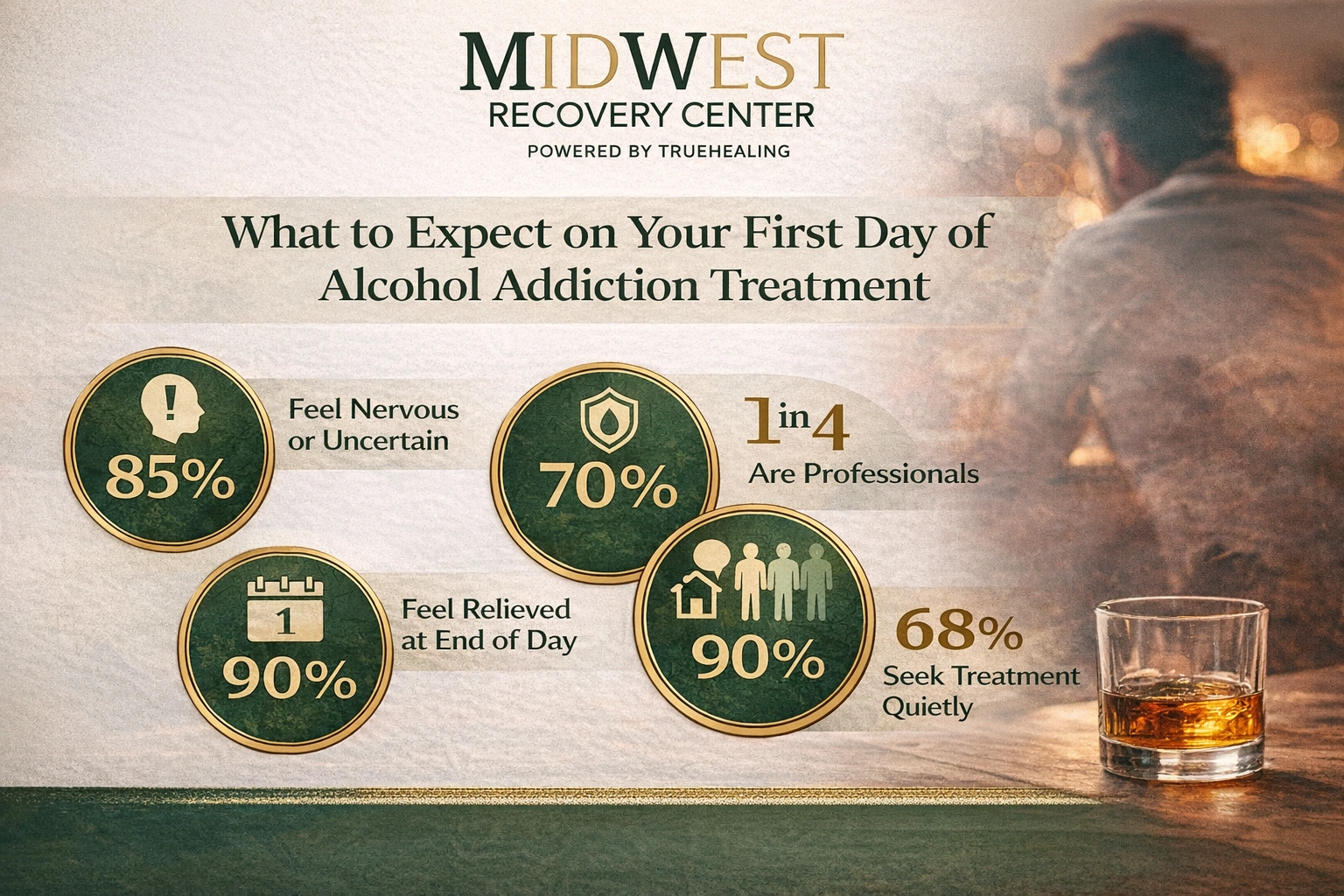
You Don’t Have to Feel Hopeful Yet
One of the quiet fears people carry into alcohol addiction treatment is the belief that they’ll be expected to feel optimistic right away.
That’s not realistic—and it’s not required.
Hope often comes after safety, not before it. On your first day, honesty matters more than positivity. You don’t have to say this will work. You don’t have to promise anything about the future.
All you have to do is be real about where you are.
We’ve learned that genuine hope grows slowly. It begins when someone realizes, “I don’t have to figure everything out today.”
Alcohol Addiction Treatment Is Explained Without Jargon
Treatment should never feel like something happening to you.
We explain what alcohol addiction treatment involves, why certain supports are recommended, and how your care is shaped. Questions are encouraged. Doubts are allowed. You’re part of the process—not a passive participant.
This clarity is especially important for people who are still managing work, family, or other responsibilities. Many individuals seek treatment options that feel accessible and local, including those Looking for Alcohol Addiction Treatment in Maumee, Ohio or Looking for Alcohol Addiction Treatment in Youngstown, Ohio, where proximity helps reduce the emotional weight of starting care.
The First Day Is Often Quieter Than You Expect
There’s no cinematic breakthrough on day one.
Most people leave their first day feeling tired—but steadier. The kind of tired that comes from letting your guard down for the first time in a long while.
One person once described it this way: “It felt like putting a heavy bag down that I forgot I was carrying.”
That’s intentional. The first day isn’t meant to fix everything. It’s meant to make tomorrow feel possible.
Why the First Day Matters More Than It Seems
The first day of alcohol addiction treatment isn’t about change—it’s about foundation.
It teaches your nervous system that support exists. It replaces imagined fears with lived experience. And it proves something important: asking for help doesn’t make things worse. It usually makes them clearer.
You don’t need certainty to begin. You don’t need confidence. You only need enough willingness to take the next step.
Frequently Asked Questions About Your First Day in Alcohol Addiction Treatment
Will I be judged for how much or how long I’ve been drinking?
No. Our role isn’t to judge or compare. Alcohol addiction treatment focuses on understanding patterns and impact—not assigning blame or labels.
Do I have to commit to long-term treatment on the first day?
No. The first day is about assessment and stabilization. Decisions about next steps are made collaboratively, not forced immediately.
What if I’m scared and change my mind?
Fear is expected. You’re allowed to voice it. Treatment is a conversation, not a trap. Our goal is to support clarity, not pressure.
Will I be forced to talk in groups right away?
Not necessarily. Everyone moves at their own pace. We respect readiness and personal boundaries, especially early on.
Can I still work while starting alcohol addiction treatment?
Often, yes. Many treatment plans are designed to support people who still have responsibilities. This is discussed during assessment so care fits your life.
What if I don’t feel “sick enough” to be here?
That feeling is incredibly common. Treatment isn’t reserved for people at a breaking point. If alcohol is causing distress or dependence, support is valid.
Is everything I share confidential?
Yes. Confidentiality is a core part of ethical care. Privacy and trust are foundational to effective treatment.
What if I’ve tried to stop before and couldn’t?
That doesn’t mean you failed. It often means your body and mind need structured support—not more willpower.
A Final, Gentle Word
If you’re standing at the edge of this decision—aware that something needs to change but unsure what comes next—that awareness matters.
Your first day in alcohol addiction treatment isn’t about becoming someone new. It’s about giving yourself a safer place to pause, breathe, and be honest.
You don’t have to have all the answers. You just have to take the next small step.
Call (888) 657-0858 to learn more about our Alcohol Addiction Treatment services in Toledo, Ohio.