Most people assume rehab is out of reach financially, and that assumption keeps a lot of people from ever making the call. The reality is that most major insurance plans are legally required to cover substance use treatment, and understanding exactly what yours pays for is the fastest way to move from uncertainty to action.
Does insurance cover rehab?
According to a 2023 SAMHSA report, cost or concerns about paying for treatment was cited by nearly one in three adults who needed but did not receive substance use care. That statistic matters because the barrier is largely perceived rather than real. Most commercial insurance plans, including employer-sponsored plans and marketplace coverage, are required by federal law to include substance use disorder treatment. The question is not really whether coverage exists. The question is which services are covered, at what level, and what your share of the cost looks like.
What federal law requires insurance to cover
Two federal laws form the foundation of rehab coverage in the United States. The Mental Health Parity and Addiction Equity Act (MHPAEA), originally passed in 2008 and significantly strengthened since, requires that insurance plans offer mental health and substance use disorder benefits that are no more restrictive than their medical and surgical benefits. In plain terms: if your insurer covers 30 days of inpatient care for a cardiac event, it cannot arbitrarily cap inpatient addiction treatment at 7 days without applying the same standards.
The Affordable Care Act added a second layer by classifying mental health and substance use disorder services as essential health benefits. Any plan sold through the ACA marketplace, and most employer-sponsored plans, must include these services. Together, these two laws mean that a plan denying substance use treatment coverage outright is almost certainly out of compliance.
What “essential health benefits” actually means for you
Essential health benefits is a legal classification, but what it means practically is that the full continuum of addiction care qualifies for coverage. Detoxification, inpatient residential treatment, partial hospitalization programs (PHP), intensive outpatient programs (IOP), standard outpatient counseling, and medication-assisted treatment (MAT) all fall within covered services under compliant plans. This applies to marketplace plans and to the vast majority of employer-sponsored group health plans, which cover most working adults with commercial insurance.
What rehab services insurance typically pays for
Insurance does not just cover a single type of rehab. It covers the continuum of care that addiction medicine uses to match treatment intensity to clinical need.
Medical detox is the first level: supervised withdrawal management, typically provided in a hospital or residential setting, where clinicians manage the physical effects of stopping substance use. Residential or inpatient treatment follows, providing round-the-clock care in a structured facility. Partial hospitalization programs run five to seven hours per day, five days a week, with the patient returning home or to sober living each evening. Intensive outpatient programs typically meet nine or more hours per week and allow patients to maintain work or family commitments while receiving structured treatment. Standard outpatient is the least intensive level, usually one to two sessions per week for ongoing support. Medication-assisted treatment, which includes FDA-approved medications like buprenorphine, methadone, and naltrexone, is also a covered service under most compliant plans. Each of these levels is generally a covered benefit under major commercial insurance carriers.
Co-occurring mental health treatment
Many people entering treatment for substance use also carry a diagnosis of depression, anxiety, PTSD, or another mental health condition. Treatment for these co-occurring disorders is covered under the same parity protections that apply to addiction care. The MHPAEA does not distinguish between addiction-only treatment and integrated dual-diagnosis treatment. If your plan covers substance use services, it covers mental health services alongside them at equivalent terms. This matters because integrated treatment for co-occurring conditions produces meaningfully better outcomes, and there is no reason to assume that mental health care requires a separate benefit or carries a stricter limit.
How private insurance covers rehab
Commercial carriers, including Aetna, Anthem BCBS, Cigna, Optum, and Tricare, cover rehab under their behavioral health benefits. The structure is consistent across most plans: in-network providers receive a negotiated rate, and your cost-sharing (deductible, copay, and coinsurance) is based on that rate. Out-of-network providers are billed at a higher rate, and your cost-sharing is typically much higher, sometimes leaving you responsible for a significant portion of the total bill.
Prior authorization is standard practice at most commercial insurers for residential and higher levels of care. Before admission to an inpatient or PHP program, the insurer reviews the clinical documentation and approves the level of care based on medical necessity criteria. The insurer is approving whether the level of care is medically warranted, not simply whether addiction exists as a diagnosis. Treatment teams submit this documentation routinely, and approval for clinically appropriate levels of care is common. If you are exploring coverage through Aetna for Toledo-area treatment or want to understand what Cigna covers for addiction treatment in the Toledo area, verifying your specific plan’s benefits before admission removes the guesswork entirely.
What out-of-pocket costs look like
Your deductible is the amount you pay before insurance begins covering costs. Your copay is a fixed dollar amount per visit or admission. Coinsurance is the percentage of costs you share with the insurer after your deductible is met. Your out-of-pocket maximum is the most you will pay in a given plan year before insurance covers 100% of covered services. According to KFF’s 2023 Employer Health Benefits Survey, the average in-network deductible for single coverage in an employer-sponsored plan was approximately $1,735. Actual costs vary considerably by plan, employer contribution, and level of care. Midwest Recovery Center verifies benefits before admission so you know your real numbers before a financial commitment is made, rather than learning them after the fact.
Does insurance cover rehab if you have a pre-existing condition?
Yes. Under the ACA, insurers are prohibited from denying coverage or charging higher premiums based on a pre-existing condition, and addiction is explicitly included in that protection. A history of substance use disorder cannot be used to disqualify you from coverage, exclude treatment from your benefits, or impose a waiting period before care begins. This protection applies to marketplace plans and most employer-sponsored plans. The fear that disclosing a substance use history will result in a denial is not grounded in current law. Your prior history does not change what your plan is required to cover.
How to verify your insurance coverage before you call a rehab
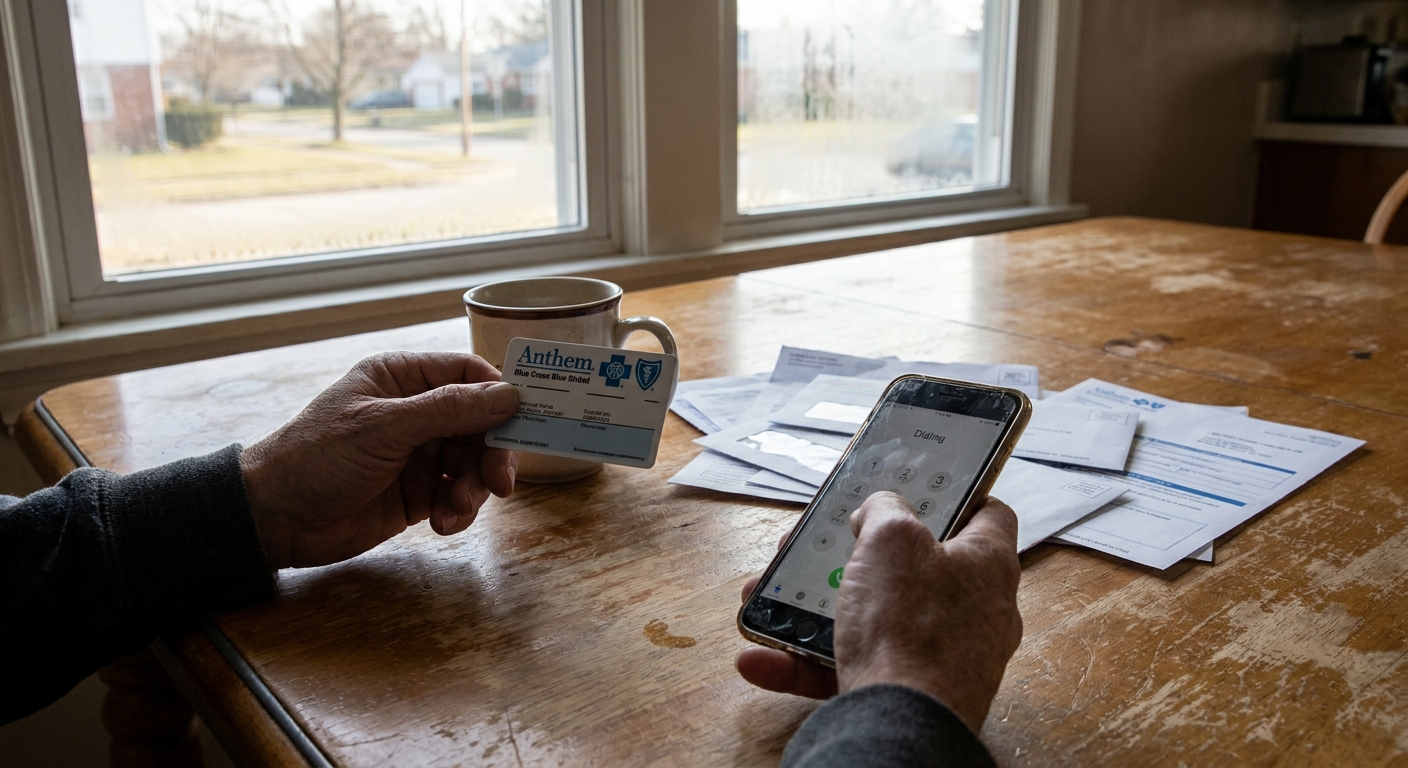
Verifying coverage takes about five minutes and eliminates the financial uncertainty that keeps many people from taking the next step. Start by locating the member services number on the back of your insurance card. When you call, ask specifically about your substance use disorder benefits, not just behavioral health coverage in general. Ask whether the treatment facility you are considering is in-network. Ask what prior authorization is required and how long the approval process takes. Ask about your deductible, copay, and coinsurance for inpatient and outpatient behavioral health services. Finally, ask the representative for a reference number for the call so there is a record of what you were told.
For those in the Youngstown and Mahoning County area, understanding what in-network access looks like through your specific carrier before making a call to a treatment center gives you a much clearer starting point for that conversation.
What to do if your insurance doesn’t cover rehab
A denial is not a final answer. Every insurance plan sold in the United States is required to have an internal appeals process, and you have the right to use it. If the denial is based on medical necessity, the treatment team can submit additional clinical documentation supporting the need for care. If the internal appeal fails, you have the right to an independent external review, where a third party, not your insurer, evaluates the decision.
If appeals do not resolve the issue, ask the treatment center directly about financial assistance or sliding-scale fees. Many facilities have mechanisms for patients whose insurance falls short. If you are currently uninsured or underinsured, Ohio Medicaid covers the full continuum of substance use disorder treatment and is worth exploring as a separate option.
Frequently asked questions
Does insurance cover inpatient rehab?
Yes. Medically necessary inpatient stays are a covered benefit under compliant commercial insurance plans. Length of stay is determined by ongoing medical necessity reviews, not a fixed number of days. As long as the treatment team can document clinical need for continued residential care, the stay can be authorized to continue.
Does insurance cover outpatient rehab?
Yes. Both IOP and PHP are covered under most commercial plans, typically at lower cost-sharing than inpatient care. For individuals who do not require 24-hour supervision, these levels of care are often the starting point and the most financially accessible entry into treatment.
Does insurance cover medication-assisted treatment?
Most major commercial plans cover FDA-approved MAT medications including buprenorphine, methadone, and naltrexone. Some plans require prior authorization specifically for MAT, separate from the authorization for the broader treatment program. Confirming this detail during your benefits verification call is worth the extra question. Military families using Tricare for rehab coverage in the Toledo area should ask specifically about MAT authorization requirements, as Tricare has its own prior authorization procedures.
How long will insurance pay for rehab?
Duration is driven by medical necessity, not a set number of days. Insurers conduct ongoing utilization reviews for active inpatient and PHP admissions. The treatment team submits clinical documentation at each review to demonstrate continued need. For patients with genuine clinical need, coverage can extend through the full recommended course of treatment.
What is prior authorization and how does it work?
Prior authorization is the insurer’s process of reviewing clinical information before approving a level of care. For residential and PHP admissions, the treatment facility submits documentation, including the clinical assessment and diagnosis, to the insurer, which then approves or requests additional information. This is a standard step, not a barrier unique to addiction treatment. Most treatment centers handle this process directly on your behalf.
Does tricare cover rehab for military families?
Yes. Tricare covers substance use disorder treatment across the same continuum as major commercial plans, including detox, inpatient, outpatient, and MAT. Prior authorization requirements apply, and coverage specifics depend on which Tricare plan the enrollee holds. Verifying benefits through Tricare before admission confirms which facilities are in-network and what your cost-sharing looks like under your specific plan.