

Burnout rarely announces itself loudly.
It settles in slowly, like background noise you don’t notice until silence feels unfamiliar.
Most people who reach this point didn’t stop caring. They cared too much for too long. They kept showing up, pushing through, holding things together—until one day the fuel light stayed on no matter how much rest they tried to add.
At Midwest Recovery Center, we meet emotionally exhausted people every day. Not people who failed—but people whose systems have been asking for relief in quieter and quieter ways. If that’s where you are, this isn’t about doing more. It’s about listening. And about how a Residential Treatment Program can help you finally hear what burnout has been trying to say.
Burnout Is Not a Personal Shortcoming
Burnout often gets framed as an individual problem: poor boundaries, weak coping skills, not enough resilience.
That framing misses the truth.
Burnout is a physiological and emotional response to sustained stress without adequate recovery. When pressure becomes constant, your nervous system adapts. It stays activated. Over time, that activation leads to exhaustion, numbness, irritability, and disconnection.
This isn’t a flaw. It’s biology.
Your system learned how to survive. Burnout is the signal that survival mode has gone on too long.
Why Burnout Feels So Confusing
One of the hardest parts of burnout is how disorienting it can be.
You might still be functioning—working, parenting, managing responsibilities—yet feel internally empty. Things that once mattered feel flat. Decisions feel heavy. Even rest doesn’t restore you the way it used to.
That confusion often leads people to blame themselves:
Why can’t I bounce back?
Why isn’t this working anymore?
Burnout creates symptoms that don’t respond to surface-level solutions. That’s because the issue isn’t effort. It’s overload.
A Residential Treatment Program addresses burnout at the level it actually lives: the nervous system.
Pushing Through Is Often the Last Thing Burnout Needs
Emotionally exhausted people are usually experts at endurance. They’re the ones who adapt, compensate, and keep going when others would stop.
But burnout doesn’t respond to willpower. Pushing through sends the message that the system’s distress isn’t important enough to pause for. Over time, the body learns to mute signals entirely.
That’s when people say things like:
“I don’t feel like myself anymore.”
“I don’t know what I need.”
“I feel disconnected from everything.”
Residential treatment creates a rare counter-message: You don’t have to push here.
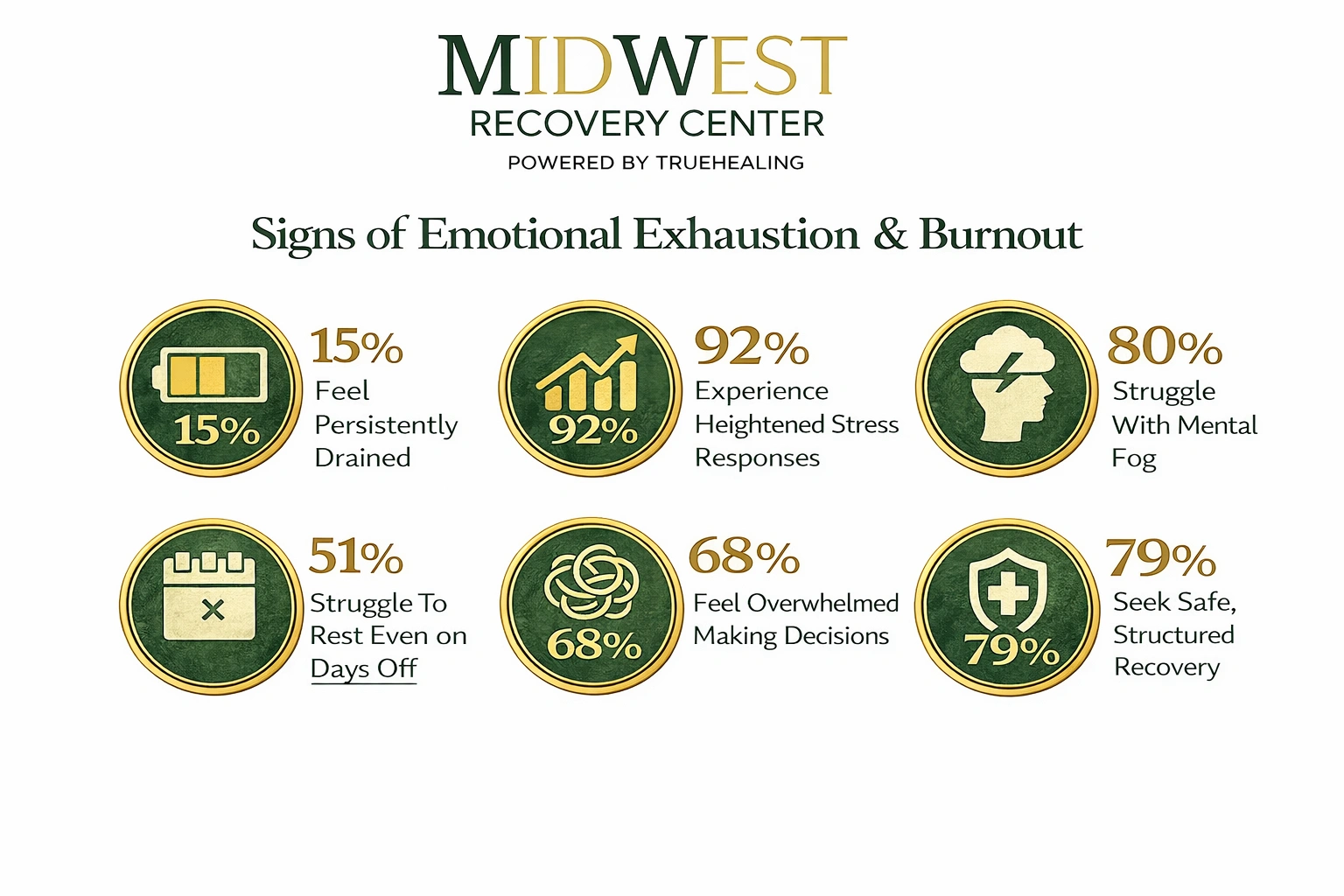
What a Residential Treatment Program Changes First
When someone enters a Residential Treatment Program, the first thing that changes isn’t insight. It’s pace.
Days become predictable. Expectations lower. Decisions decrease. The constant demand to respond, perform, and produce is removed.
This matters more than most people realize.
Burnout thrives in chaos and constant input. Predictable structure tells the nervous system it’s safe to stand down. Only then can real listening begin.
Think of it like letting a shaken snow globe settle. You don’t force clarity. You allow it.
Why Time Off Often Isn’t Enough
Many people try to address burnout with vacations, sick days, or leaves of absence. These can help—but they often don’t go deep enough.
Why? Because time off usually removes tasks but not pressure.
Your mind is still scanning. Your identity is still tied to performance. Your body doesn’t fully believe it’s allowed to rest.
A Residential Treatment Program removes not just workload, but responsibility for managing everything else. Meals are handled. Schedules are set. Support is present.
This isn’t about dependency. It’s about giving your system a chance to reset without negotiation.
Burnout as a Message, Not a Crisis
In residential care, burnout isn’t treated as something to fix quickly. It’s treated as information.
What has been asked of you for too long?
What have you been carrying alone?
What parts of yourself have been silenced to keep functioning?
These questions aren’t rushed. They emerge naturally once the nervous system isn’t constantly defending against the next demand.
A Residential Treatment Program gives space for that listening to happen without judgment or urgency.
The Role of Environment in Emotional Exhaustion
Environment plays a larger role in burnout than most people realize.
If you return each day to the same triggers, expectations, and patterns, your body stays on alert—even if you want to feel better. Residential treatment changes the environment entirely.
Reduced noise.
Consistent routines.
No constant decision-making.
That steadiness helps the body relearn safety. For many people, starting care in a familiar region helps ease the transition—especially those Looking for Residential Treatment Program in Oregon, Ohio or Looking for Residential Treatment Program in Perrysburg, Ohio who want support that feels accessible and grounded.
Burnout Doesn’t Mean You Need to Abandon Your Life
A common fear we hear is, If I stop, everything will fall apart.
Burnout already creates quiet fractures—missed connections, strained relationships, declining health. Residential treatment isn’t about abandoning your life. It’s about preserving it.
People don’t leave residential care with a new personality. They leave with restored capacity: clearer boundaries, more emotional range, and a better sense of what’s sustainable.
The goal isn’t escape. It’s recalibration.
When Rest Becomes the Work
For emotionally exhausted people, rest can feel uncomfortable. Even threatening.
Without constant motion, feelings surface. Fatigue becomes undeniable. Grief and anger may emerge. This is why rest often gets avoided.
Residential treatment reframes rest as active work. As something that requires safety, support, and structure.
Over time, people notice subtle shifts:
- Sleep deepens
- Emotions return gradually
- Thoughts slow down
This isn’t collapse. It’s recovery.
Listening Changes the Signal
Burnout doesn’t disappear overnight. But when it’s finally heard, it changes.
The alarm softens. The message clarifies. What once felt like failure begins to look like guidance.
A Residential Treatment Program helps people translate burnout from a warning into a roadmap—showing what needs to change and what deserves protection going forward.
Frequently Asked Questions About Burnout and Residential Treatment
Is burnout enough reason to consider residential treatment?
Yes. Burnout is a legitimate health concern. If emotional exhaustion is impacting your functioning or sense of self, structured support can be appropriate.
Do I have to be in crisis to enter a residential treatment program?
No. Many people enter residential care preventively—before burnout escalates into depression, anxiety, or physical illness.
How long does it take to feel better?
Relief often begins with rest and safety, but recovery is gradual. Residential treatment focuses on stabilization first, then understanding and rebuilding.
Will residential treatment force me to stop working forever?
No. Treatment is about restoring capacity, not removing purpose. Many people return to work with clearer boundaries and healthier expectations.
Is residential treatment only about mental health or substance use?
Residential care often addresses the whole person—stress, coping, emotional regulation, and patterns that contribute to burnout.
What if I’m afraid to slow down?
That fear is common. Supportive residential environments help people slow down safely, without overwhelm or isolation.
Is everything I share confidential?
Yes. Confidentiality is a core part of ethical care and essential for people who feel emotionally exposed or depleted.
A Gentle Closing Thought
If you’re emotionally exhausted, you don’t need to prove it.
You don’t need permission to be tired.
And you don’t need to wait until everything collapses.
Burnout isn’t failure. It’s a signal.
A Residential Treatment Program can help you listen to that signal with care, clarity, and support—so you don’t have to keep running on empty.
Call (888) 657-0858 to learn more about our Residential Treatment Program services in Toledo, Ohio.