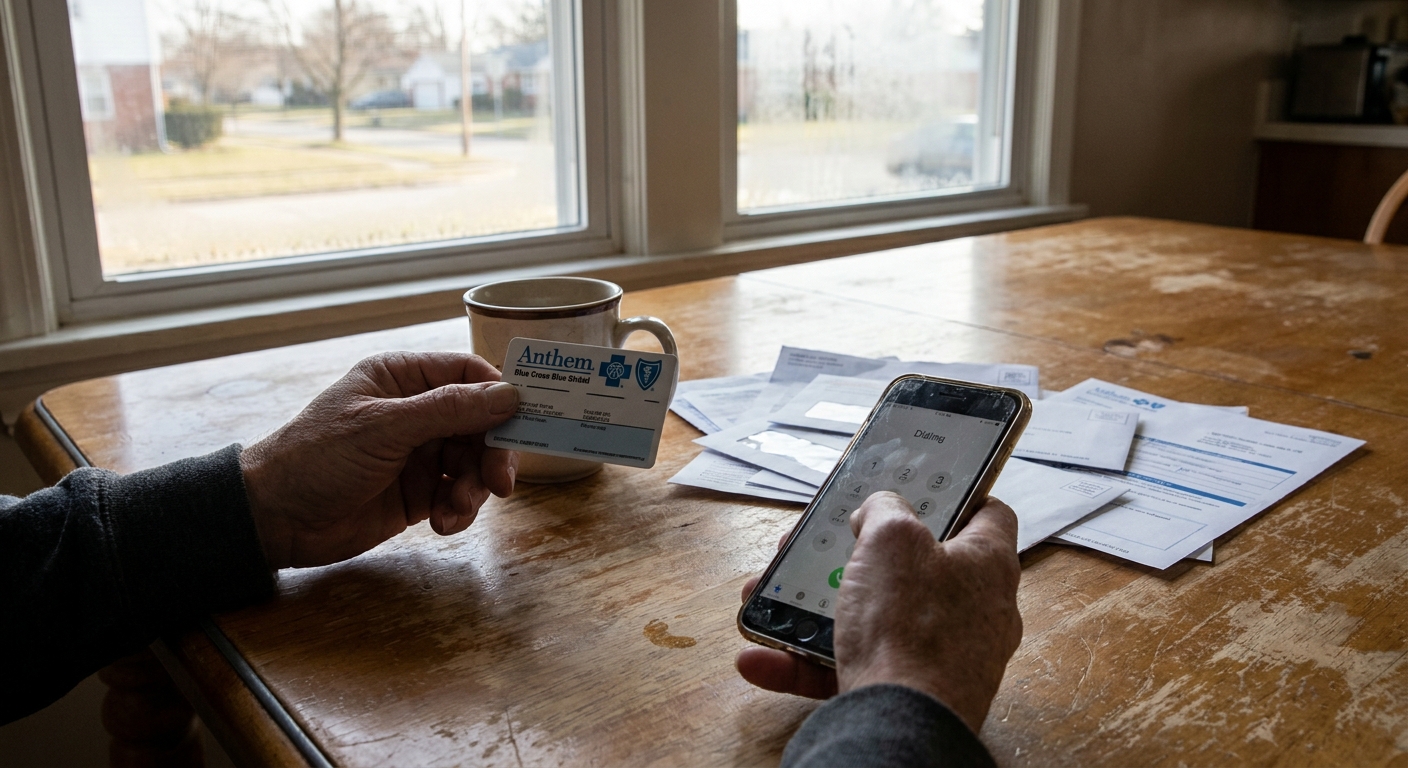
Anthem BCBS covered rehab in Youngstown, Ohio follows a more predictable structure than most people realize, and understanding that structure before admission is what separates manageable treatment costs from financial shock. This guide walks through every layer of Anthem coverage that applies to substance use and co-occurring mental health treatment: what gets authorized, how prior auth works, what your cost-sharing actually means, and what to do when a claim gets denied.
What anthem BCBS actually covers for rehab in youngstown
The Mental Health Parity and Addiction Equity Act requires commercial insurers like Anthem BCBS to cover mental health and substance use disorder treatment at the same level as medical and surgical care. A 2023 analysis by the American Psychiatric Association found that parity enforcement gaps remain widespread, but the legal baseline is clear: Anthem cannot impose stricter prior authorization rules, lower day limits, or higher cost-sharing on behavioral health treatment than it applies to comparable medical care. That protection exists in your policy right now, whether or not you have needed to use it.
Coverage for rehab is not a single benefit. It is a tiered structure that mirrors the clinical levels of care defined by the American Society of Addiction Medicine.
Medical detox and residential treatment
Anthem covers medically supervised detox and residential treatment when clinical criteria support that level of care. Those criteria come from the ASAM criteria, a standardized assessment tool that evaluates six dimensions: withdrawal risk, biomedical conditions, emotional and behavioral conditions, treatment readiness, relapse potential, and recovery environment. If your clinical presentation scores high enough on withdrawal risk or safety concerns, Anthem’s utilization reviewers are required to authorize detox. Residential follows when the home environment or psychiatric complexity makes lower levels of care clinically inappropriate.
Before admission, call Anthem member services using the number on the back of your insurance card and ask specifically whether your plan requires prior authorization for inpatient substance use treatment and whether ASAM criteria documentation is required for approval. Get that answer in writing by requesting a reference number for the call.
Partial hospitalization programs (PHP)
A partial hospitalization program runs five to six hours per day, five days per week, and is the most common step-down from residential treatment. Anthem regularly authorizes PHP when a member no longer needs 24-hour supervision but still requires structured clinical support. A 2020 study published in the Journal of Substance Abuse Treatment found that patients who transitioned from residential to PHP rather than discharging directly to outpatient showed significantly lower 90-day readmission rates, which is part of why Anthem’s utilization reviewers often prefer PHP as a bridge level.
When evaluating a Youngstown-area facility, ask the admissions team for their PHP authorization rate with Anthem specifically. A facility that regularly works with Anthem will have data on how often PHP gets approved at initial request versus after peer-to-peer review.
Intensive outpatient programs (IOP)
IOP is the most frequently used Anthem-covered level of care in the Youngstown market. It typically runs three hours per day, three to five days per week, and allows members to live at home while maintaining structured treatment. Anthem generally authorizes IOP when the member has stable housing, manageable withdrawal risk, and a treatment plan that includes evidence-based modalities: cognitive behavioral therapy, motivational interviewing, and contingency management are the three Anthem reviewers most commonly look for in authorization documentation.
A 2021 meta-analysis in JAMA Psychiatry reviewed 36 studies covering more than 10,000 patients and found that IOP produced outcomes equivalent to residential treatment for patients without severe comorbid psychiatric conditions. Before enrolling, confirm with the facility that their IOP curriculum uses evidence-based modalities, because Anthem’s authorization reviewers look for exactly that documentation.
Standard outpatient and aftercare
Ongoing outpatient therapy, typically one to two sessions per week, and medication-assisted treatment are both covered under Anthem’s behavioral health benefit for continuing care after discharge. SAMHSA’s 2022 national survey found that individuals who engaged in any form of continuing care after residential or PHP had a 40 to 50 percent lower rate of relapse in the first year compared to those who discharged without follow-up. Coverage for aftercare does not end when the acute phase ends, and your Anthem plan treats it as part of the same treatment continuum.
Before signing any admission paperwork, ask the admissions coordinator to map out the full continuum of care they offer: from your initial level through PHP, IOP, outpatient, and MAT. If they cannot describe how Anthem covers each step, that is important information. For a broader look at how commercial insurance handles the full treatment continuum, that framing applies across most major carriers.
How the prior authorization process works
A 2023 AMA survey of physicians found that 94 percent reported prior authorization delays in care, and 33 percent reported that a patient experienced a serious adverse event because of a prior auth delay. In behavioral health, those delays carry real clinical risk. Prior authorization means Anthem must approve the treatment before it begins, or in emergency situations, within 24 to 72 hours of admission. Skipping prior auth is the single most common reason behavioral health claims get denied after treatment is already complete.
What information anthem requires
Anthem’s utilization reviewers typically request a DSM-5 diagnosis code, the ASAM placement criteria worksheet completed by a licensed clinician, an individualized treatment plan, prescriber or clinical supervisor information, and documentation of any prior treatment episodes. The facility’s utilization review team handles the submission of these documents. Your job is to confirm they have submitted everything and to obtain the authorization number before your first day of treatment.
How to track your authorization status
Authorization status appears in your Anthem member portal under the “Claims and Coverage” section, listed by service category and date range. A 2022 KFF analysis found that fewer than one in five insured Americans had checked their authorization status during a treatment episode, which is a direct reason surprise bills happen. Log into your Anthem account the day after admission and confirm the authorization is listed as approved, with the correct facility name, level of care, and authorized date range showing.
In-network vs. out-of-network rehab in youngstown
FAIR Health’s 2023 commercial claims database found that out-of-network behavioral health care cost patients an average of 3.2 times more per episode than in-network care. In dollar terms, a PHP stay that runs a $4,000 facility charge per week costs you a copay at an in-network provider and 40 to 60 percent of the bill at an out-of-network one. The difference between those two outcomes is whether the facility has a contracted rate with Anthem.
Finding anthem in-network providers near youngstown
The Anthem provider directory is available at sydney.com, which is Anthem’s member-facing search platform. Search for behavioral health or substance use disorder treatment, filter by Mahoning County, and look for providers listed as “in-network” for your specific plan. One distinction that matters: a facility saying it “accepts Anthem” is not the same as being contracted in-network with Anthem. Many facilities accept Anthem as a payer while billing at out-of-network rates. Call the facility’s billing department, ask for their National Provider Identifier (NPI) number, and verify that NPI directly on the Anthem portal under your plan before confirming admission.
For a step-by-step look at verifying network status in Mahoning County, that process applies whether you are checking a residential program, PHP, or outpatient provider.
When out-of-network care may still be covered
If no in-network provider exists at your needed level of care within a reasonable geographic distance, federal mental health parity rules on network adequacy require Anthem to address that gap. The mechanism is a single-case agreement, where Anthem negotiates a contracted rate with an out-of-network facility for your specific episode of care. If you cannot find an in-network residential or PHP program in the Youngstown area through the Anthem portal, call member services and ask them to initiate a single-case agreement. Do not assume out-of-network means uncovered.
Your deductible, copay, and out-of-pocket maximum explained
A 2023 Commonwealth Fund survey found that 43 percent of insured adults in the U.S. could not accurately define their own deductible. That number matters because misunderstanding cost-sharing is what leads people to delay treatment or stop after one level of care. Here is how the three terms work together in a concrete example: if your Anthem plan has a $2,000 deductible and 20 percent coinsurance, you pay the first $2,000 of covered charges yourself, then 20 percent of everything after that until you hit your out-of-pocket maximum. On a 30-day residential stay billed at $1,200 per day, that math gets significant fast.
How to read your anthem summary of benefits
The Summary of Benefits and Coverage (SBC) is the document that contains every number you need. It is available in your Anthem member portal under “Plan Documents,” or your employer’s HR department can provide it. Four line items control your rehab costs: the annual deductible, the out-of-pocket maximum, inpatient mental health and SUD cost-sharing, and outpatient mental health and SUD cost-sharing. Pull the SBC today and locate all four numbers before you speak with any facility’s admissions team. Knowing your deductible status before admission prevents the most common form of financial surprise.
How the out-of-pocket maximum protects you
Once your total covered spending hits the annual out-of-pocket maximum, Anthem pays 100 percent of all remaining covered charges for the rest of the plan year. If you enter a PHP program in February and hit your out-of-pocket max by the end of that stay, every subsequent IOP session through December costs you nothing in cost-sharing. CMS data from 2023 showed that fewer than 8 percent of commercially insured adults hit their out-of-pocket maximum in any given year, but the majority of those who did were seeking behavioral health or chronic condition treatment. Calculate where you stand against your out-of-pocket maximum, accounting for any medical spending already applied, before your first day of treatment.
Medication-assisted treatment and what anthem covers
A 2021 SAMHSA and NIDA joint analysis found that FDA-approved medications for opioid use disorder reduce overdose mortality by 50 percent or more compared to behavioral treatment alone. Anthem is required under the Mental Health Parity and Addiction Equity Act to cover FDA-approved MAT, including buprenorphine, naltrexone, and methadone dispensed through licensed opioid treatment programs, at the same level as other medical treatment. Coverage for MAT is not discretionary, and it does not require completing a residential stay first.
Buprenorphine and naltrexone coverage
Office-based buprenorphine (Suboxone and its generics) and injectable naltrexone (Vivitrol) are both covered under Anthem’s pharmacy and medical benefits, depending on how they are prescribed and dispensed. Suboxone filled at a pharmacy typically runs through the pharmacy benefit, which generally carries lower cost-sharing than the medical benefit. Vivitrol administered in a clinical setting often runs through the medical benefit. Prior authorization is commonly required for buprenorphine in some Anthem plans, particularly beyond an initial 30-day supply. Ask your prescribing provider which benefit the medication runs through and confirm that prior auth has been filed before your first prescription is filled.
Methadone through opioid treatment programs
Methadone for opioid use disorder is only covered by Anthem when dispensed at a SAMHSA-certified opioid treatment program. A standard pharmacy cannot dispense methadone for addiction treatment, and Anthem does not cover it through the pharmacy benefit for that indication. OTPs in the Youngstown and Mahoning County area include licensed programs that must meet SAMHSA certification standards. Verify that the specific OTP is contracted in-network with Anthem before your first dose, because OTP billing disputes are common and out-of-network methadone costs accumulate quickly given the daily dosing schedule.
Co-occurring mental health conditions and dual diagnosis coverage
SAMHSA’s 2022 National Survey on Drug Use and Health found that 19.4 million adults in the U.S. had co-occurring substance use and mental health disorders in the prior year, representing roughly half of all people in SUD treatment. Anthem covers co-occurring conditions under a single treatment episode when clinical documentation supports both diagnoses. This is a parity protection most members do not fully use: you do not need two separate authorizations for depression and alcohol use disorder being treated simultaneously. One authorization, with integrated clinical documentation, covers both.
What “dual diagnosis” authorization looks like
A facility documents co-occurring disorders to Anthem’s utilization reviewers by including both DSM-5 diagnosis codes in the authorization request, an integrated treatment plan that addresses both conditions, and progress notes that reflect both tracks of treatment. Facilities with strong experience billing Anthem for dual diagnosis cases know how to structure that documentation so that the authorization does not lapse when a psychiatric condition is added mid-episode. Before admission, ask the treatment team whether they have experience billing Anthem for co-occurring diagnoses and what their authorization continuation rate looks like on dual diagnosis cases. If they cannot answer that question, find out who their utilization review contact is and ask that person directly.
How to appeal a denied claim or authorization
A 2023 KFF analysis of ACA marketplace and employer plan data found that insurers denied between 10 and 20 percent of in-network claims at the initial stage, and that members who filed appeals won roughly 40 percent of those cases. In behavioral health specifically, appeals overturn denials at rates that make filing one worth doing every time. Most members never file an appeal, which means they absorb costs that Anthem was ultimately obligated to pay.
The three-level appeal process
Anthem’s appeal process has three levels. Level 1 is an internal reconsideration, where you or the facility submits a formal appeal with supporting clinical documentation. The deadline is 180 days from the date of the denial for most Anthem plans, though urgent care situations carry a 72-hour turnaround requirement. Level 2 is a second internal review, conducted by a different Anthem reviewer. Level 3 is an external independent review conducted by an organization not affiliated with Anthem, which Ohio law requires insurers to offer after internal appeals are exhausted. When a denial arrives, request the Explanation of Benefits (EOB) and the denial reason code the same day. That document starts the appeal clock and contains the specific clinical rationale Anthem used, which is what you rebut in your appeal.
Using ohio’s independent review process
Ohio law entitles every commercially insured member to an external independent review after exhausting Anthem’s internal appeal process. The Ohio Department of Insurance oversees this process and maintains a list of approved independent review organizations. Ohio’s external review program has consistently overturned behavioral health denials at rates above the national average, according to the Ohio Department of Insurance’s 2022 annual report on independent medical reviews. File for external review within 45 days of receiving Anthem’s final internal denial. Do not wait, and do not assume the internal denial is the end of the process. It rarely is.
Practical steps before your first day of treatment
A 2019 NIDA-funded study of treatment entry barriers found that insurance confusion and billing uncertainty were among the top three reasons individuals delayed seeking treatment by 30 days or more after deciding they needed help. The pre-admission verification process is not administrative friction. It is what keeps treatment from being interrupted by a billing dispute on day five.
Verify benefits before admission
Call Anthem member services using the number on the back of your card and ask for a benefits verification for behavioral health and substance use disorder treatment. Specify the level of care you are entering, using the correct terminology: residential, partial hospitalization, or intensive outpatient. Ask four things explicitly: your current deductible balance, your coinsurance rate for that level of care, whether prior authorization is required, and whether the facility is in-network under your specific plan. Make this call the same day you confirm a bed is available, not after. Midwest Recovery Center’s team verifies benefits before admission, so coordinate with their admissions staff to run a parallel verification and compare results. If the numbers do not match, call Anthem back with both sets of information.
If you are also evaluating coverage through another carrier, the process for confirming Optum network status in the Youngstown market follows a nearly identical verification structure.
Get everything in writing
Before your first day of treatment, collect four documents: the prior authorization number and authorized length of stay from Anthem, the facility’s financial agreement showing your expected cost-sharing, confirmation of the facility’s in-network status under your plan, and the Anthem EOB for any prior medical services applied to your deductible this plan year. Verbal approvals from Anthem representatives do not create billing obligations. Written authorization numbers do. If you arrive without a written authorization number in hand, you are exposed to a denial that did not have to happen.
What coverage means for long-term recovery in youngstown
A 2018 NIDA review of treatment duration studies found that patients who completed a full continuum of care, from medically supervised detox through at least 90 days of structured outpatient follow-up, had sustained recovery rates more than double those of patients who received only acute stabilization. Coverage that funds the full continuum, detox through residential through PHP through IOP through outpatient and MAT, produces fundamentally different outcomes than coverage used only to manage a crisis and then abandoned.
Anthem BCBS is structured to cover that full continuum. The authorization process, the parity protections, the appeal rights, and the out-of-pocket maximum all exist to support extended, continuous treatment. Understanding how those mechanisms work before you walk through the door is what makes the difference between a treatment episode that holds and one that gets cut short by a billing surprise. Start with a benefits verification call this week. Everything else follows from knowing your numbers.
Frequently asked questions
Does anthem BCBS cover inpatient rehab in youngstown, ohio?
Anthem BCBS covers inpatient and residential rehab when clinical criteria support that level of care, specifically the ASAM criteria for placement. Prior authorization is required in most Anthem plans before or shortly after admission. Contact Anthem member services before admission to confirm authorization requirements for your specific plan.
What is the difference between in-network and out-of-network rehab with anthem?
In-network facilities have a contracted rate with Anthem, meaning your cost-sharing is limited to your plan’s deductible and coinsurance. Out-of-network facilities bill at higher rates, and Anthem pays a smaller portion, leaving you responsible for a significantly larger share. Always verify a facility’s NPI number directly on the Anthem portal before admission, because “accepting Anthem” and being contracted in-network are not the same thing.
Does anthem cover medication-assisted treatment like suboxone or vivitrol?
Anthem covers FDA-approved MAT medications including buprenorphine (Suboxone), naltrexone (Vivitrol), and methadone dispensed at SAMHSA-certified opioid treatment programs. Prior authorization is often required for buprenorphine. Whether the medication runs through the pharmacy benefit or medical benefit affects your cost-sharing, so confirm that distinction with your prescriber before filling the first prescription.
What happens if anthem denies my rehab claim?
File an appeal immediately using the EOB and the denial reason code Anthem provides. Anthem’s internal appeal process has two levels, and Ohio law requires access to a third-level external independent review after internal appeals are exhausted. Roughly 40 percent of behavioral health appeals result in overturned denials. Do not accept an initial denial as a final answer.
How do I find out what my anthem plan actually covers before I start treatment?
Request the Summary of Benefits and Coverage (SBC) from your Anthem member portal or your employer’s HR department. Focus on four numbers: your annual deductible, out-of-pocket maximum, inpatient mental health and SUD cost-sharing, and outpatient mental health and SUD cost-sharing. Then call Anthem member services to confirm prior authorization requirements and current deductible status for the specific level of care you are seeking.
Can anthem BCBS cover both addiction treatment and mental health care at the same time?
Yes. Anthem covers co-occurring substance use and mental health conditions under a single treatment authorization when the facility’s clinical documentation includes both DSM-5 diagnoses and an integrated treatment plan. You do not need separate authorizations. Choose a facility with documented experience billing Anthem for dual diagnosis cases to ensure the authorization stays active throughout the episode.