
The Morning After Hits Different When You Thought You Were Done
There’s a kind of silence that follows relapse. Not the loud kind full of consequences and confrontations—but the quiet, hollow kind. When no one knows yet. When you’re the only one carrying the secret.
That was me. I had 92 days. Enough to feel proud, to believe I had crossed some invisible threshold. And then, it slipped. Not in a dramatic spiral—but in one small, quiet choice. And after that, another.
If that’s where you are, I need you to hear something first: you’re not broken. You’re not a fraud. You’re still in this. And this blog isn’t here to shame you or rush you. It’s here to calmly walk you through what alcohol addiction treatment really looks like—especially if you’re thinking about starting again.
And yes, that can start with a medical detox program like the one in Toledo.
What Treatment Is Really About (Spoiler: It’s Not Starting Over)
Let’s be honest—starting “treatment” again can feel humiliating. Like you’re erasing the progress you made. Like you’re back at square one.
But you’re not.
Every day you stayed sober taught you something. Every trigger you faced, every urge you managed, even the ones you didn’t—you learned something. Going back to treatment now just means you’re walking in with more awareness than last time.
At its core, treatment is about support. Structure. Having the right conditions in place so you can actually heal—not just stop drinking for a while.
And for many of us, the first step in that support is medical detox.
What Is a Medical Detox Program—and Why Does It Matter?
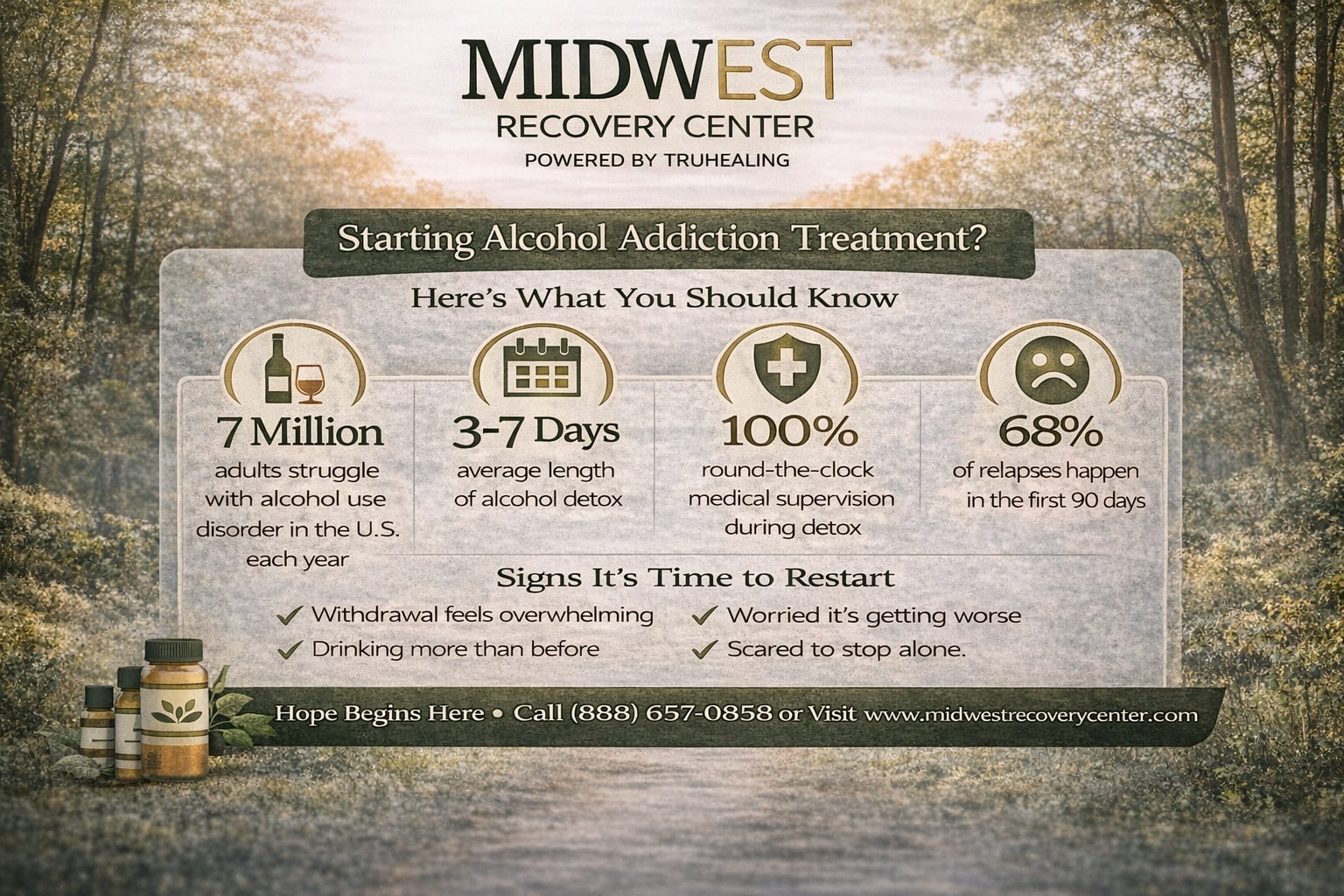
Alcohol withdrawal can be dangerous. Full stop. Shaky hands and headaches are just the surface. For some, stopping suddenly can cause seizures, heart problems, or severe confusion (a condition called delirium tremens).
That’s why medical detox exists.
Here’s what happens in a medical detox program like the one offered at Midwest Recovery in Toledo:
- Medical supervision 24/7: Your vitals are monitored. You’re not left alone to white-knuckle it.
- Medication support: You may receive medication to ease withdrawal symptoms, prevent complications, and help you rest.
- Emotional support: Detox can bring up shame, fear, grief. Trained staff are there to walk you through it.
It’s not a punishment. It’s a reset button—for your body, your brain, and maybe your belief that recovery is possible.
“But I Didn’t Drink That Much. Do I Really Need Detox?”
This is a question a lot of us ask, especially if we weren’t drinking daily or didn’t see our use as “severe.”
But here’s the thing: physical dependence doesn’t always look like movies make it out to be.
You might benefit from medical detox if:
- You feel sick, anxious, or shaky when you don’t drink.
- You’ve tried to quit and felt physically unwell after.
- You find yourself needing more to get the same effect.
- You build your schedule around when it’s “safe” to drink.
Detox isn’t just for people drinking from morning till night. It’s for anyone whose body has started to rely on alcohol—and who wants to stop in a way that’s safe, supported, and lasting.
Detox Is the Start—Not the Whole Story
Some people think detox is all they need: dry out, get through the withdrawals, then go back to life.
But here’s the truth most of us learn the hard way: detox doesn’t fix what made you drink. It clears the fog, but the real work—learning new ways to cope, building a life that doesn’t revolve around alcohol—that happens afterward.
At Midwest Recovery, detox is often just the first step. After that, you might step into:
- Residential treatment
- Partial hospitalization programs (PHP)
- Intensive outpatient programs (IOP)
- Alumni support and ongoing therapy
And if you’re coming back after relapse? That next step may look different this time. Stronger. Clearer. More aligned with what you actually need now.
You Haven’t Failed. You’re Restarting with More Information.
Let’s reframe this.
You didn’t blow your shot. You gathered data. You hit a point that said, “Okay… something’s still not healed.” That’s not failure. That’s feedback.
Relapse is part of the story for many of us. Not all. But many. And when you stop pretending it didn’t happen and start asking what you need now—that’s recovery, too.
If you’re near the Perrysburg area, this may be the moment to consider reconnecting. Midwest Recovery offers medical detox support in Perrysburg, Ohio and other surrounding communities.
You Don’t Have to Be “Sure” to Start
Some people walk into detox ready and resolved. Others show up shaky, uncertain, ashamed. Both are allowed.
You don’t have to have it all figured out. You don’t need a grand plan. You just need to take one safe, honest step.
FAQ: Medical Detox + Alcohol Addiction Treatment
What’s the difference between detox and rehab?
Detox is about physical safety—managing withdrawal symptoms and stabilizing your body.
Rehab is about psychological healing—processing trauma, building coping skills, and creating a sober life plan. Detox usually comes first.
How long does alcohol detox take?
It varies, but most alcohol detox programs last 3–7 days. Severe withdrawal may take longer. The medical team monitors symptoms closely and adjusts support as needed.
Is medical detox painful?
It doesn’t have to be. The goal is to reduce discomfort as much as possible. Medications can help with anxiety, insomnia, and physical symptoms like tremors or nausea.
Can I detox at home?
If you have physical dependence, detoxing alone can be dangerous and even life-threatening. Symptoms can escalate quickly. Medical detox is the safest option.
What happens after detox?
You’ll talk with a care team to figure out the next best step—whether that’s inpatient treatment, outpatient therapy, or something in between. You’re not pushed—you’re supported.
If you’re in the Oregon area and wondering whether this is the right time, you can learn more about treatment options near Oregon, Ohio that start with detox and lead to something steadier.
📞 Ready to take the first step—again?
Call (888) 657-0858 or visit Midwest Recovery’s Medical Detox Program in Toledo, Ohio to learn how we can help you find your footing—without judgment, without shame, just support.