Ohio has one of the highest rates of unmet substance use treatment need in the Midwest, and for Toledo-area residents, navigating Aetna Medicaid rehab in Toledo, Ohio is often the first real barrier between wanting help and actually getting it. This guide walks through exactly what Aetna Medicaid covers for rehab, how the authorization process works, and what steps move the process forward without delays.
What aetna medicaid covers for rehab in toledo
According to the Ohio Department of Medicaid, more than 3.4 million Ohioans are enrolled in the state’s Medicaid program, with the majority of those members assigned to a managed care plan rather than receiving benefits through fee-for-service. Aetna operates as one of those managed care organizations, contracting with the state to administer behavioral health benefits for enrolled members in Lucas County and surrounding Northwest Ohio communities including Maumee.
What this means in practice: Aetna Medicaid is not just a billing arrangement. It is a structured plan with its own provider network, prior authorization rules, and care management protocols, all operating within the boundaries Ohio Medicaid sets for substance use disorder (SUD) treatment.
The difference between aetna medicaid and commercial aetna plans
This distinction matters more than most people realize. Aetna Medicaid and an employer-sponsored Aetna commercial plan are fundamentally different products. Commercial plans are regulated primarily at the federal level under the ACA and employer benefit rules. Aetna Medicaid operates under a contract with the Ohio Department of Medicaid, which sets the benefit floor, the formulary, and the medical necessity standards Aetna must apply.
In practice, this means the prior authorization rules differ, the provider network is separate, and co-pay structures are distinct. Under Ohio Medicaid, most members owe zero or nominal co-pays for SUD treatment. If you have a commercial Aetna plan through an employer, the cost-sharing, network, and authorization pathway are entirely different from what this guide covers.
How ohio medicaid managed care shapes your benefits
Ohio contracts with several managed care organizations to deliver Medicaid benefits, and Aetna is one of them. The Ohio Department of Medicaid publishes enrollment data by plan and county, and Lucas County residents assigned to Aetna receive their behavioral health benefits directly through Aetna’s managed care structure rather than through the state.
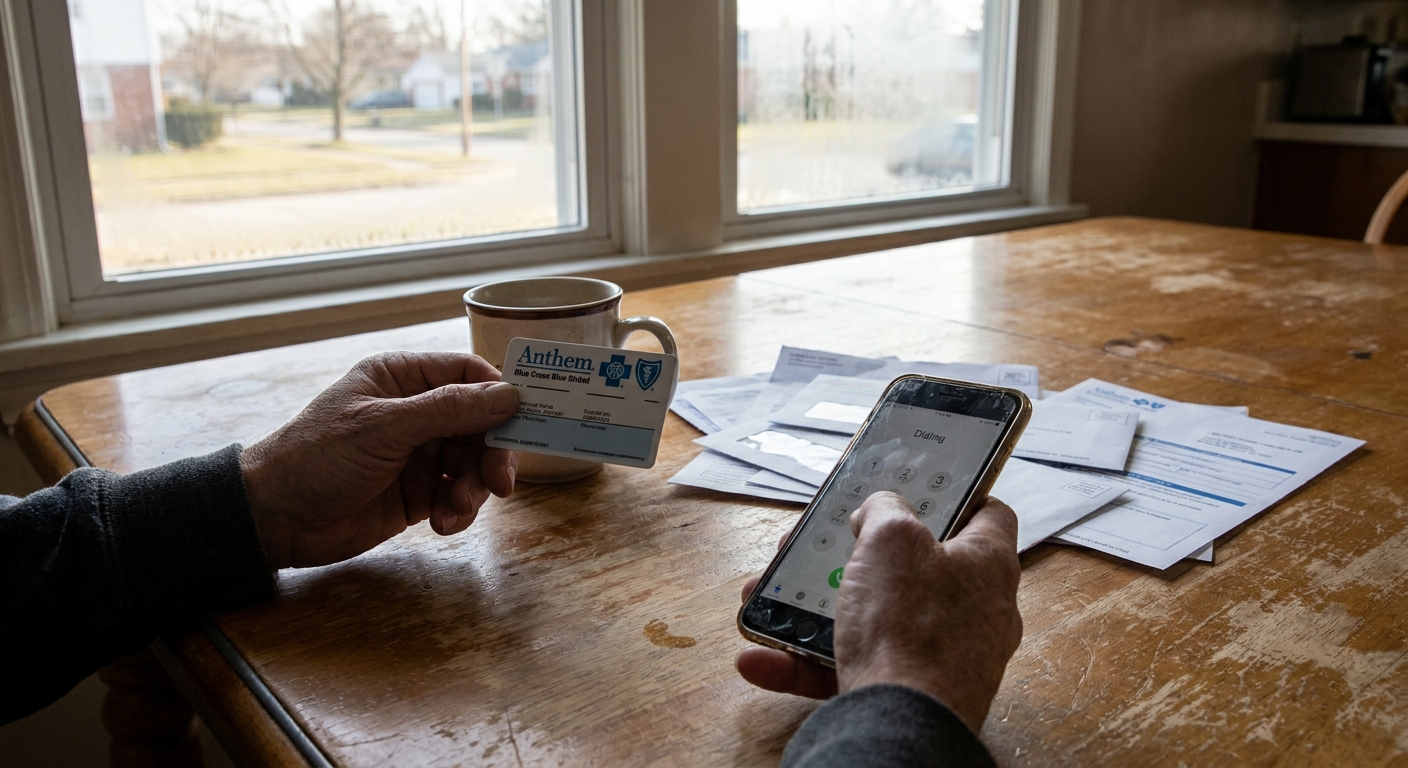
The practical step here is simple but often skipped: before calling any Toledo rehab facility, confirm which managed care plan you are enrolled in. Log into your Ohio Benefits account at benefits.ohio.gov, or call the Ohio Medicaid Consumer Hotline at 800-324-8680. Your Aetna Medicaid card will identify the plan, but enrollment can change at annual redetermination, so verify current status before starting the intake process.
If you are comparing how different plans handle rehab access in this region, the coverage structure for how Medicaid pays for addiction care in Toledo is a useful parallel reference.
Levels of care aetna medicaid typically authorizes
A 2021 analysis by the American Society of Addiction Medicine found that treatment matching , placing patients at the clinically appropriate level of care based on ASAM criteria , improves 90-day abstinence rates by 30% compared to defaulting everyone to the same program type. Aetna Medicaid uses the ASAM Patient Placement Criteria as its clinical framework for authorizing rehab services, and understanding that framework is your map for knowing what is accessible.
The ASAM continuum runs from medically managed withdrawal through residential care, intensive outpatient programs, and standard outpatient counseling. Authorization at each level depends on clinical criteria, not on what you prefer or what a facility offers.
Detox and medical stabilization
Medically supervised detox (ASAM Level 3.7 or 4.0) is covered under Aetna Medicaid when clinical criteria are met. A 2020 study published in the Journal of Substance Abuse Treatment found that patients who received medically managed withdrawal had significantly higher rates of treatment engagement at 30 days compared to those who attempted non-medical detox. The mechanism is straightforward: managing acute withdrawal safely keeps people alive and in the system long enough for treatment to begin.
For Toledo-area members, most inpatient detox admissions require prior authorization, though emergency admissions are typically covered and authorization is requested retrospectively. The concrete action here: when you call any Toledo facility for an intake assessment, ask directly whether they handle Aetna Medicaid prior authorization for detox on your behalf. Most credentialed facilities do, and knowing this upfront eliminates confusion about who makes the call.
Inpatient and residential treatment
Residential treatment (ASAM Level 3.1 through 3.5) and medically managed inpatient (Level 4) are authorized when the clinical assessment documents that a patient cannot safely or effectively be treated in a less intensive setting. According to SAMHSA’s 2022 Treatment Episode Data Set, approximately 15% of SUD admissions nationally are at the residential level, reflecting how genuinely this tier is reserved for complex presentations.
Authorization for residential care typically begins with an initial approval period of 7 to 14 days, with continued stay reviews conducted by Aetna’s clinical team. What speeds that process is documentation: a completed biopsychosocial assessment, prior treatment history, and documented medical or psychiatric complexity. If the admitting facility has a dedicated utilization review team, they manage continued stay authorizations directly with Aetna, which is one practical reason to choose a facility with experience billing Aetna Medicaid.
Intensive outpatient and partial hospitalization programs
For members who do not meet inpatient criteria, intensive outpatient (IOP, ASAM Level 2.1) and partial hospitalization (PHP, ASAM Level 2.5) are the most commonly authorized levels for Toledo-area Aetna Medicaid members. IOP typically requires nine or more hours of structured programming per week; PHP runs 20 or more hours. A 2019 Cochrane Review of IOP effectiveness found outcomes comparable to inpatient treatment for patients without acute medical or psychiatric instability, which is why Aetna, like most managed care plans, uses these levels as the default authorization for the majority of SUD presentations.
Services at these levels typically include group therapy, individual counseling, psychoeducation, and case management. Medical necessity at IOP and PHP is determined by ongoing clinical documentation showing the member requires structured support but can safely live in the community.
Standard outpatient counseling
Outpatient individual and group therapy (ASAM Level 1.0) functions as step-down care following higher-intensity treatment and as long-term continuing care. Under Ohio Medicaid rules, co-pays for outpatient behavioral health visits are minimal or waived. To find an actively contracted outpatient provider in Toledo or Lucas County, use Aetna’s online provider directory at aetna.com and filter for behavioral health, then cross-reference with the Ohio Medicaid provider search at ohiomedicaid.gov to confirm the provider is currently enrolled in both Aetna Medicaid and Ohio Medicaid. Both steps are necessary because a provider can be listed in one directory but not actively contracted in the other.
Co-occurring mental health coverage under aetna medicaid
The Substance Abuse and Mental Health Services Administration estimates that approximately 9.2 million adults in the U.S. live with a co-occurring mental health and substance use disorder. In Ohio, co-occurring presentations are the norm rather than the exception in SUD treatment settings. Federal mental health parity law, specifically the Mental Health Parity and Addiction Equity Act, requires Aetna Medicaid to cover mental health treatment at the same level of generosity as medical or surgical care. Ohio Medicaid reinforces this through its managed care contracts.
For Toledo-area members, this means depression, anxiety, PTSD, and other psychiatric conditions are covered alongside SUD treatment, not as a separate carve-out that requires navigating a different system.
Behavioral health services typically included
Aetna Medicaid authorizes a range of integrated behavioral health services: psychiatric evaluation, medication management, individual therapy, group therapy, and crisis stabilization. A 2018 study in JAMA Psychiatry found that integrated treatment addressing both SUD and co-occurring psychiatric conditions reduced hospitalizations by 24% over 18 months compared to sequential or parallel treatment models.
When you contact a Toledo provider, ask directly whether they are credentialed to bill both SUD and mental health diagnoses under Aetna Medicaid in a single episode of care. Some facilities hold dual licensure; others refer out for psychiatric services. Knowing this before admission prevents gaps in care that can destabilize early recovery.
Medications for addiction treatment under aetna medicaid
According to the National Institute on Drug Abuse, medications for opioid use disorder, including buprenorphine and naltrexone, reduce opioid use and overdose mortality by 50% or more. These are not optional add-ons; they are a core component of evidence-based SUD care. Ohio Medicaid, including Aetna’s managed care plan, covers FDA-approved medications for addiction treatment: buprenorphine (Suboxone), naltrexone (Vivitrol), and methadone through licensed opioid treatment programs.
Buprenorphine and naltrexone typically require prior authorization under Aetna Medicaid, and prescribers at Toledo-area facilities will initiate that process. For methadone, treatment occurs only at federally certified opioid treatment programs. When meeting with a prescribing provider in Toledo, ask which medications are on Aetna Medicaid’s preferred drug list for the current plan year, because formulary placement affects how quickly authorization is approved.
How prior authorization works , and how to move through it fast
A 2023 American Medical Association survey found that 94% of physicians reported prior authorization delays impacting patient care, and 33% said a patient experienced a serious adverse event as a result of waiting. For SUD treatment, delays translate directly into risk. Ohio Medicaid rules require Aetna to process standard prior authorization requests within three business days and urgent requests within 24 hours.
The authorization process begins when the treating facility submits clinical documentation to Aetna’s behavioral health line. Aetna’s clinical reviewers assess medical necessity against ASAM criteria and issue an approval, a denial, or a request for additional information. What prevents delays is preparation: when calling Aetna’s behavioral health line yourself, have your Medicaid ID number, the name and NPI of the requesting provider, the specific level of care requested, and a brief summary of the clinical situation. Facilities with experienced utilization review staff handle this routinely, but knowing what is needed means you can confirm it is happening on your behalf.
Finding in-network rehab providers in toledo under aetna medicaid
Network adequacy standards under Ohio Medicaid require Aetna to maintain sufficient in-network provider capacity so that members can access covered services without unreasonable travel or wait times. Lucas County is an urban county, so network density is generally higher than in rural Ohio, but not every facility that accepts Medicaid is contracted with Aetna specifically.
The cost difference matters: out-of-network care under Medicaid typically means the provider is not reimbursed at all through the plan, shifting the financial exposure entirely. To verify a Toledo facility’s in-network status, use Aetna’s provider directory and then confirm with the Ohio Medicaid provider search tool. Call the facility directly and ask whether they are currently contracted with Aetna Better Health of Ohio, which is the specific entity administering Aetna Medicaid in the state.
Midwest Recovery Center accepts Ohio Medicaid through most of the state’s managed care plans, including Aetna, CareSource, Buckeye, Molina, Anthem, AmeriHealth Caritas, and Humana. That breadth of Medicaid acceptance is a practical differentiator: many private-pay and commercially focused facilities do not hold active contracts with Ohio Medicaid managed care plans at all, which creates network gaps for members who need that coverage. If you are also exploring how coverage works under other plans, Anthem’s rehab coverage structure in Lucas County follows a similar authorization framework.
What to do if aetna medicaid denies a claim or authorization
A 2022 MACPAC report found that Medicaid managed care plans denied approximately 15% of prior authorization requests, but that a substantial share of those denials were overturned on appeal when clinical documentation was complete. A denial is not a final answer.
The appeals process under Aetna Medicaid has two formal stages: an internal appeal, which Aetna must resolve within 30 days for standard requests or 72 hours for urgent ones, followed by an external review conducted by an independent organization under Ohio’s oversight. You also have the right to request a peer-to-peer review, where your treating clinician speaks directly with Aetna’s medical director to discuss the clinical basis for the requested care. This conversation alone resolves many denials before a formal appeal is needed. The first call to make within 24 hours of receiving a denial letter: contact your treating provider’s utilization review team and request that they initiate a peer-to-peer review with Aetna. Preserving that window matters because peer-to-peer requests are time-sensitive.
For a broader look at how Ohio Medicaid structures its rehab benefits across all managed care plans, the full Ohio Medicaid rehab coverage framework provides useful context before your first call.
What to try this week
Call Aetna Medicaid’s behavioral health line, confirm your current enrollment and plan details, and ask for a list of in-network Toledo rehab providers that offer the level of care your situation requires. That single call establishes what you are working with: your authorization pathway, your network options, and whether you are, in fact, enrolled in Aetna’s plan or a different Ohio Medicaid managed care plan. Everything else in this process builds from that confirmation.
If you are also weighing options in the Youngstown area or for a family member covered under a different plan, how Buckeye Medicaid handles rehab coverage in Youngstown covers comparable ground for that plan and market.
Frequently asked questions
Does aetna medicaid cover drug and alcohol rehab in toledo, ohio?
Aetna Medicaid covers substance use disorder treatment at all levels of the ASAM continuum, including detox, residential, intensive outpatient, and standard outpatient services, for enrolled members in Toledo and Lucas County. Authorization requirements and covered services are governed by Ohio Medicaid’s managed care contracts with Aetna.
Do I need a referral to start rehab under aetna medicaid?
Most SUD treatment entry under Aetna Medicaid does not require a primary care referral. You can contact an in-network Toledo rehab facility directly for an intake assessment, and the facility will initiate any required prior authorization with Aetna on your behalf.
How long does prior authorization take for rehab under aetna medicaid?
Ohio Medicaid rules require Aetna to process standard prior authorization requests within three business days. Urgent requests must be resolved within 24 hours. Submitting complete clinical documentation at the time of the request is the most effective way to prevent delays.
What medications for opioid or alcohol use disorder does aetna medicaid cover?
Aetna Medicaid covers FDA-approved medications for addiction treatment, including buprenorphine (Suboxone), naltrexone (Vivitrol), and methadone through licensed opioid treatment programs. Buprenorphine and naltrexone typically require prior authorization; your prescribing provider in Toledo handles that process.
What happens if aetna medicaid denies my rehab authorization?
You have the right to appeal. Request a peer-to-peer review between your provider and Aetna’s medical director first, as this resolves many denials without a formal appeal. If the denial stands, you can file an internal appeal (resolved within 30 days for standard requests) and then an external independent review through Ohio’s oversight process.
Does aetna medicaid cover treatment for mental health conditions alongside addiction?
Federal parity law and Ohio Medicaid rules require Aetna to cover mental health treatment, including psychiatric evaluation, therapy, and medication management, at the same level as physical health care. Co-occurring conditions like depression, anxiety, and PTSD are covered alongside SUD treatment for enrolled Toledo-area members.