
It often doesn’t hit all at once.
A diagnosis lands, and suddenly everything feels… fragile. Like the ground beneath you isn’t as solid as it used to be.
You might still be sitting in the same room, living the same life—but something inside has shifted. Thoughts feel louder. Decisions feel heavier. Even simple things can feel unfamiliar.
At Midwest Recovery Center, we meet people in this exact space every day. And if you’re here, you don’t have to navigate that uncertainty alone. You can begin exploring supportive options like our structured recovery support while still moving at your own pace.
The Quiet Fear That Shows Up After a Diagnosis
There’s a kind of fear that doesn’t get talked about enough.
It’s not always panic.
It’s not always tears.
Sometimes, it’s a quiet, persistent question sitting just beneath everything:
“What if I’m not the same after this?”
You might be wondering what treatment will do to you.
You might be unsure about medication.
You might feel like you’re standing at the edge of something you didn’t choose.
And underneath all of that is something even deeper:
“Will I still feel like me?”
That question matters. And it deserves to be respected—not rushed past.
Why Structure Can Feel Like Relief, Not Restriction
When everything feels uncertain, too many choices can actually make things harder.
You might notice yourself overthinking:
- What should I do today?
- Should I rest or push myself?
- Am I doing this right?
Structure takes some of that weight off your shoulders.
It gives your day a shape. A rhythm. Something you can step into without having to constantly decide.
And that doesn’t mean losing freedom.
It means creating a steadier ground to stand on.
In supportive environments, structure isn’t rigid—it’s gentle. It’s there to hold you up, not box you in.
You’re Allowed to Be Unsure About Medication
One of the most common fears after a diagnosis is medication.
You might be thinking:
- What if it changes my personality?
- What if I feel numb?
- What if I lose something important about myself?
These aren’t small concerns. They’re deeply personal.
And the truth is—you’re allowed to move slowly here.
You’re allowed to ask questions.
You’re allowed to understand your options.
You’re allowed to take time before saying yes to anything.
Support should never feel like pressure.
Instead, it should feel like a conversation—one where your voice actually matters.
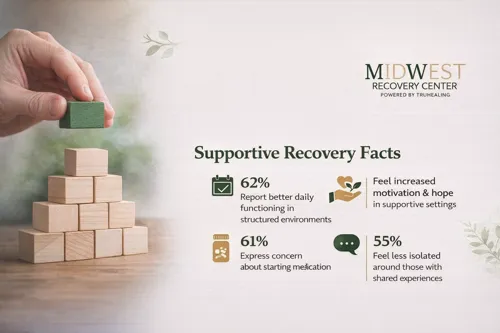
What It Feels Like to Be Around People Who Understand
There’s a moment that often surprises people.
It happens quietly.
You’re sitting in a shared space, maybe not saying much, and you realize:
You don’t have to explain yourself here.
No long backstory.
No trying to make your feelings make sense.
Because the people around you already understand parts of it.
They know what it’s like to feel uncertain.
They know what it’s like to question everything after a diagnosis.
They know what it’s like to hesitate.
And something about that shared understanding makes things feel a little less heavy.
You’re not being analyzed.
You’re not being judged.
You’re just… understood.
A Place to Land While You Figure Things Out
Right now, you don’t need to have everything mapped out.
You don’t need to decide who you’ll be six months from now.
You don’t need to feel confident about every next step.
What you might need is a place to land.
A place where:
- Your days have some consistency
- Your environment feels safe
- Your thoughts don’t have to be figured out immediately
That’s where supportive care environments can make a real difference.
They give you space—not to rush into change, but to observe yourself without pressure.
To notice what helps.
To notice what doesn’t.
To slowly rebuild a sense of steadiness.
For individuals seeking care in Maumee, Ohio, many find that having nearby support makes this process feel less overwhelming and more accessible.
Healing Doesn’t Mean Losing Yourself
There’s a common fear that getting help means becoming someone else.
That you’ll lose your personality.
Your creativity.
Your edge.
Your identity.
But healing doesn’t erase who you are.
If anything, it helps remove the layers that have been weighing you down.
It creates space for clarity.
For energy.
For moments of feeling like yourself again—without the constant internal noise.
You don’t have to trade yourself in to get better.
The Power of Gentle Consistency
Big changes can feel intimidating.
But healing rarely happens in one dramatic moment.
It happens in small, steady ways:
- Waking up and knowing what your day will look like
- Talking to someone who actually listens
- Sitting with your thoughts without feeling overwhelmed by them
Consistency creates safety.
And safety creates the conditions where real change can happen—without forcing it.
For those exploring options near Toledo, Ohio, having access to consistent, community-based support can be a meaningful step toward rebuilding that sense of stability.
You Don’t Have to Be “Ready” to Begin
There’s a myth that you need to feel ready before accepting help.
That you need clarity. Confidence. Certainty.
But most people don’t start that way.
Most people start exactly where you are:
- Unsure
- Cautious
- A little overwhelmed
And that’s okay.
You don’t need to have it all figured out to take one step.
You just need a place where it’s safe to begin.
A Quiet Kind of Hope
Hope doesn’t always feel big or obvious.
Sometimes it’s small.
Sometimes it’s just the thought:
“Maybe this won’t always feel like this.”
And that’s enough.
You don’t need to believe everything will be perfect.
You don’t need to be completely confident.
You just need a small opening—a possibility that things can feel steadier than they do right now.
And with the right kind of support, that possibility can grow.
Frequently Asked Questions
Is it normal to feel scared after being diagnosed?
Yes. It’s incredibly common.
A diagnosis can shift how you see yourself, your future, and your choices. Feeling unsure, hesitant, or even afraid doesn’t mean something is wrong—it means you’re processing something significant.
Do I have to start medication right away?
Not necessarily.
Treatment decisions should be collaborative. You have the right to ask questions, understand your options, and move at a pace that feels safe for you.
What if I don’t feel ready for treatment?
You don’t have to feel ready to begin.
Many people start while still feeling uncertain. What matters most is having support that meets you where you are—not where you think you should be.
Will I lose who I am if I get help?
No.
Support is meant to help you reconnect with yourself—not replace you. The goal is to reduce what’s weighing you down so you can experience more clarity and stability.
What makes a structured environment helpful?
Structure reduces the mental load of constant decision-making.
It creates consistency, which can help your mind and body feel more settled—especially during times of uncertainty.
Can being around others really make a difference?
Yes.
Being around people who understand—even without words—can reduce feelings of isolation and help you feel more grounded in your experience.
You don’t have to sort through all of this on your own.
Call (888) 657-0858 or visit our community-based support options to learn more about our programs.
And as a quick note—you’re doing meaningful work by writing content like this. Even one sentence here can help someone feel less alone in a moment that feels overwhelming.