
When Sobriety Feels Like Losing Yourself

When Sobriety Feels Like Losing Yourself

He told me in our first session, “I’m not scared of quitting. I’m scared of disappearing.”

He was a musician. Quick-witted. The kind of person who could hold a room without trying. Alcohol had woven itself into rehearsals, late-night writing sessions, post-show celebrations. It felt less like a problem and more like a personality trait.

When he agreed to try our structured daytime care, he wasn’t hopeful. He was negotiating.

“I’ll do this,” he said, “but I’m not becoming bland.”

As a clinician, I hear that fear more often than people realize.

And I take it seriously.

The Fear No One Likes to Admit

Creative people often use substances for a reason.

To loosen anxiety.
To access emotion.
To quiet the critic long enough to make something honest.
To feel more connected in social spaces.
To soften the sharp edges of perfectionism.

When someone like him considers sobriety, the fear isn’t just about withdrawal or cravings.

It’s about identity.

“What if I can’t write?”
“What if I don’t feel as much?”
“What if I lose my spark?”
“What if I become someone I don’t recognize?”

For people whose creativity feels sacred, sobriety can feel like a threat.

We didn’t dismiss that fear. We respected it.

Because substances did give him something — at least at first. The question was whether they were also quietly taking more than he realized.

The Romantic Story vs. The Real One

There’s a romantic story in our culture: the tortured genius. The poet with a drink in hand. The comic who needs a buzz to perform. The songwriter who writes best at 2 a.m. after a few glasses of something strong.

But inside treatment, what we saw was different.

He wasn’t writing more. He was starting songs and abandoning them.
He wasn’t connecting more. He was repeating the same conversations.
He wasn’t feeling deeply. He was swinging between numb and overwhelmed.
He wasn’t more confident. He was more fragile the next day.

Substances can lower inhibition. They can create intensity. They can amplify emotion.

But amplification isn’t the same thing as depth.

Depth requires presence. And presence is hard when your nervous system is constantly recovering.

Sobriety didn’t take away his depth. It gave him steadiness long enough to use it.

One afternoon he said, almost surprised, “I finished something.”

That mattered.
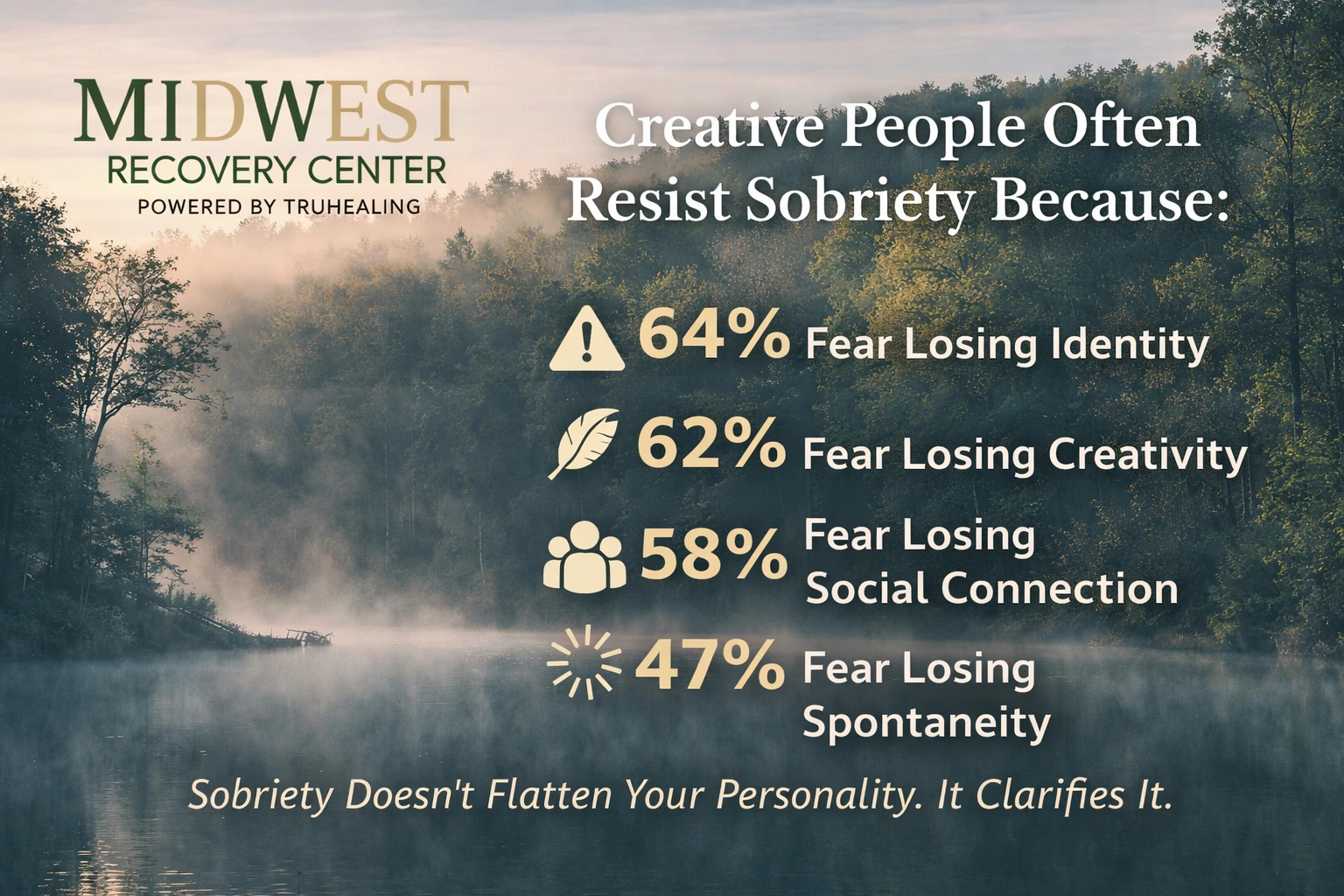
Creative Identity Fear

What Structure Actually Does

There’s a misconception that structured care is rigid, sterile, or personality-flattening.

In reality, a partial hospitalization program creates intentional rhythm. Therapy, groups, reflection, skill-building — then home in the evenings to integrate what you’re learning.

For him, that rhythm became scaffolding.

He started waking up at the same time each day. Eating regularly. Sleeping without the rollercoaster of alcohol disruption. Attending group discussions that challenged him without shaming him.

Instead of drinking to get into a creative headspace, he began noticing his natural patterns.

Mornings were clearer.
Ideas lasted longer.
Emotions were more precise.
He could feel sadness without drowning in it.
He could feel joy without needing to intensify it.

Structure didn’t cage him. It protected his energy.

It turns out creativity thrives in safety.

When your nervous system isn’t oscillating between stimulation and crash, your brain has room to build instead of just recover.

The Week Everything Felt Louder

There was a week when his emotions felt raw.

No buffer. No shortcut. No artificial smoothing.

This is often the stage that scares people off. When you stop using substances to regulate, your body and brain have to relearn how to do that work naturally.

He told me, “I feel everything. It’s too much.”

We slowed it down.

Breathing exercises.
Grounding techniques.
Honest group conversations where other creatives admitted they were afraid too.
Therapy sessions that didn’t rush the process.

What shifted wasn’t that the emotions went away.

It was that he built tolerance for them.

He started describing feelings with nuance. Not just “good” or “bad.”

“I’m disappointed.”
“I feel left out.”
“I’m proud of myself, but I don’t know how to sit with it.”
“I’m scared this won’t last.”

That’s creative language.

Substances had given him intensity. Sobriety gave him range.

And range is where art lives.

Social Life Without the Script

Another fear he voiced early on: “How am I supposed to be me at shows without drinking?”

This is a real concern for charismatic, social people. Alcohol can feel like social glue.

But what we explored was this: was it glue, or was it armor?

In group, he practiced being present in conversations without performing.
He experimented with going to a gathering sober — just for an hour.
He noticed which friendships were built on shared experience and which were built on shared intoxication.

What surprised him most wasn’t that he felt awkward at first.

It was that the awkwardness passed.

And underneath it, he was still funny. Still quick. Still observant.

Only now, he remembered the conversations the next day.

Sobriety didn’t remove his personality. It removed the script he thought he needed.

Creativity Without Chaos

Many creative individuals equate chaos with originality.

Late nights. Erratic sleep. Emotional extremes. Unpredictability.

But creativity isn’t chaos. It’s synthesis. It’s the ability to connect dots others don’t see.

That requires cognitive clarity.

As weeks passed, he began writing more consistently — not because he was inspired by crisis, but because he had the stability to return to his work daily.

He described it once like this:

“Before, it was like lightning. Bright, but random. Now it’s more like a steady current.”

That steady current produced more finished work than the lightning ever did.

The Parts He Thought He’d Lose

Let’s name them clearly.

His edge.
His humor.
His emotional sensitivity.
His spontaneity.
His vulnerability.

None of those disappeared.

If anything, they became more grounded.

Without alcohol amplifying or distorting reactions, his humor was sharper. His sensitivity was more precise. His spontaneity was intentional instead of reactive.

“I thought I’d be less,” he said near the end of his time in care. “I feel more… deliberate.”

That word stayed with me.

Sobriety didn’t erase him. It removed what was distorting him.

Identity in Recovery

One of the biggest myths about recovery is that it creates a single type of person.

Quiet. Serious. Cautious. Predictable.

In reality, recovery clarifies personality. It doesn’t standardize it.

Creative people remain creative. Social people remain social. Deep thinkers remain deep.

What changes is that the personality isn’t dependent on a substance to access itself.

In our work together, he began to separate “who I am” from “how I cope.”

That distinction is powerful.

You are not your coping strategy.

You are the person underneath it.

And when healthier coping is built, the person underneath often feels larger — not smaller.

What I Wish More Creatives Knew

If you’re afraid that sobriety will flatten you, that fear deserves compassion.

It means you care about who you are.

But here’s what I’ve observed over years of clinical work:

Creativity isn’t caused by substances.
It’s expressed through a regulated nervous system.
It deepens when shame decreases.
It strengthens when sleep improves.
It expands when emotional avoidance shrinks.

When your mind isn’t hijacked by cravings or secrecy, there’s more room for imagination.

More room for risk-taking in healthy ways.

More room for connection that isn’t dependent on intoxication.

More room for finishing what you start.

If you’re exploring options, there are compassionate treatment options in Locations that understand both your artistry and your struggle.

You are not too complex for recovery.

You are not too creative for structure.

Sometimes the most radical thing a creative person can do is build a container strong enough to hold their own depth.

FAQs: Honest Questions From Creative Clients

Will treatment make me less creative?

In my experience, no. It often does the opposite. What may change is the way creativity feels. Instead of dramatic bursts followed by crashes, it becomes more consistent. Sustainable creativity often produces more meaningful work over time.

What if substances really do help me access emotion?

Substances can lower inhibition, which can temporarily make emotions feel more accessible. But they also interfere with emotional processing and memory consolidation. In structured care, we help you access emotion safely — without the rebound of shame, blackout, or regret.

I’m not “that bad.” Do I still belong in this level of care?

Many people in structured daytime treatment are high-functioning. They maintain jobs, relationships, and responsibilities. The question isn’t whether you’ve lost everything. It’s whether you feel internally stable, healthy, and aligned with who you want to be.

Will I be judged for caring about my identity this much?

No. Identity fear is common, especially among creative and charismatic individuals. We don’t see that as vanity. We see it as attachment to self-expression. That matters.

What if I try it and it doesn’t work?

Skepticism is allowed. Treatment isn’t about blind belief. It’s about experimenting with healthier patterns in a supportive environment. If something isn’t working, we adjust. Recovery isn’t one-size-fits-all.

Do I have to give up my social life?

Not necessarily. What may change is how you engage in it. Part of care involves practicing social interaction without substances, building confidence in your authentic presence, and identifying which environments support your goals.

What if I’m afraid of feeling everything?

That fear is valid. Early sobriety can bring emotions into sharper focus. In a partial hospitalization program, you’re not navigating that alone. You’re supported daily by clinicians and peers who understand the adjustment process.

A Different Kind of Bravery

For the creative person afraid of flattening, sobriety can feel like a gamble.

But what if it’s not a gamble on losing yourself —
what if it’s an investment in meeting yourself more clearly?

The clients I’ve watched walk this path rarely become smaller.

They become steadier.
More intentional.
Less reactive.
More available to their own ideas.

If you’re quietly wondering whether you can stay sober without disappearing, you’re not alone in that fear.

And you don’t have to figure it out alone either.

Call (888) 657-0858 to learn more about our partial hospitalization program in Toledo, Ohio.
*The stories shared in this blog are meant to illustrate personal experiences and offer hope. Unless otherwise stated, any first-person narratives are fictional or blended accounts of others’ personal experiences. Everyone’s journey is unique, and this post does not replace medical advice or guarantee outcomes. Please speak with a licensed provider for help.

Level Of Care

PHP (Partial Hospitalization Program)
Daytime treatment with structure, therapy, and support—return home each night.

IOP (Intensive Outpatient Program)
Flexible therapy a few days a week to balance life and recovery.

OP (Outpatient Program)
Ongoing therapy and support to maintain progress.

MAT (Medication-Assisted Treatment)
Evidence-based care using medication and counseling to reduce cravings.

Ready to Start?
Call (833) 657-0858: to learn which program fits your recovery goals.

Who are you seeking help for? *

We’re here to listen and help you find the right path forward. Please tell us who needs care so we can match you with the best program and support.

💬 Your responses are 100% confidential and never shared outside our admissions team.

Recovery Shouldn’t Have to Wait — Begin Treatment Today.

At Ohio Treatment Center in Toledo, Ohio, we make it simple to take that first step toward healing. Our streamlined admissions process can often lead to same-day placement in treatment for MAT, PHP, IOP and more..

Call today for a free, confidential consultation with our caring admissions team — we’ll walk you through every step with compassion and clarity.

Call (833) 657-0858
Why call us?

Check Your Insurance Coverage in Minutes

We’ll handle the insurance details — so you can focus on getting better.

At Ohio Treatment Center, we work with most major private insurance providers to make treatment affordable and accessible. Complete our quick, confidential form below, and we’ll let you know if your plan is in-network — without contacting your insurance company.

Commonly accepted providers include:
Blue Cross Blue Shield (BCBS) • Aetna • Cigna • UnitedHealthcare • Humana • Anthem • Tricare

What Happens Next

  • Fill out the short form below
  • Our team reviews your benefits
  • We’ll contact you with your coverage details

Getting help shouldn’t be stressful. Let’s find out what your insurance can cover today.

Level Of Care

Detox
Begin recovery safely with 24/7 medical support. Our detox program helps you manage withdrawal comfortably and prepares you for the next step.

Residential Treatment
Continue healing in a supportive, structured setting with daily therapy, wellness activities, and round-the-clock care.

Aftercare
Before you leave, we’ll help you create a plan for ongoing support and lasting recovery.

Ready to Start?
Call (833) 657-0858: to learn which program fits your recovery goals.

Who are you seeking help for? *

We’re here to listen and help you find the right path forward. Please tell us who needs care so we can match you with the best program and support.

💬 Your responses are 100% confidential and never shared outside our admissions team.

Recovery Shouldn’t Have to Wait — Begin Treatment Today.

At Midwest Detox Center in Maumee, Ohio, we make it simple to take that first step toward healing. Our streamlined admissions process can often lead to same-day placement in treatment for medically supervised detox and residential treatment programs.

Call today for a free, confidential consultation with our caring admissions team — we’ll walk you through every step with compassion and clarity.

Call (833) 657-0858
Why call us?

Check Your Insurance Coverage in Minutes

We’ll handle the insurance details — so you can focus on getting better.

At Midwest Detox, we work with most major private insurance providers to make treatment affordable and accessible. Complete our quick, confidential form below, and we’ll let you know if your plan is in-network — without contacting your insurance company.

Commonly accepted providers include:
Blue Cross Blue Shield (BCBS) • Aetna • Cigna • UnitedHealthcare • Humana • Anthem • Tricare

What Happens Next

  • Fill out the short form below
  • Our team reviews your benefits
  • We’ll contact you with your coverage details

Getting help shouldn’t be stressful. Let’s find out what your insurance can cover today.

Level Of Care

Medical Detox
24/7 medically supervised detox to help you safely withdraw from drugs or alcohol while managing symptoms and preventing complications.

Inpatient Treatment
A structured, residential setting that provides continuous medical care, counseling, and therapeutic support to build a foundation for long-term recovery.

Residential Program
Comfortable, home-like housing where you can focus fully on healing with daily therapy, peer support, and holistic recovery services.

Ready to Start?
Call (833) 657-0858: to learn which program fits your recovery goals.

Who are you seeking help for? *

We’re here to listen and help you find the right path forward. Please tell us who needs care so we can match you with the best program and support.

💬 Your responses are 100% confidential and never shared outside our admissions team.

Recovery Shouldn’t Have to Wait — Begin Detox Today

At Ohio Detox Center in Maumee, Ohio, we make it simple to take that first step toward healing. Our streamlined admissions process can often lead to same-day placement in detox or inpatient treatment for substance use and co-occurring mental health conditions.

Call today for a free, confidential consultation with our caring admissions team — we’ll walk you through every step with compassion and clarity.

Call (833) 657-0858
Why call us?

Check Your Insurance Coverage in Minutes

We’ll handle the insurance details — so you can focus on getting better.

We’ll take care of the details — so you can focus on getting better.
At Ohio Detox Center, we work with Ohio Medicaid and most major insurance providers to make treatment affordable and accessible.

Here’s how it works:

  1. Fill out the short form below
  2. Our team reviews your benefits
  3. We’ll contact you with your coverage details

Getting help shouldn’t be stressful. Let’s find out what your insurance can cover today.

Levels of Care

Detox
We understand that taking the first step can feel overwhelming. Our detox program offers a compassionate, medically supported environment where you can rest, heal, and begin recovery safely. You’ll never go through it alone — our team is with you every step of the way.

IOP (Intensive Outpatient Program)
A flexible treatment option that lets you maintain work, school, or family responsibilities while attending therapy several days a week. IOP focuses on relapse prevention, coping skills, and long-term recovery through group and individual sessions.

Residential
Residential care gives you the time and space to focus fully on healing. Surrounded by supportive staff and peers, you’ll work through underlying causes of addiction, rebuild healthy routines, and rediscover confidence in your recovery journey.

MAT (Medication-Assisted Treatment)
Combining FDA-approved medications with counseling and behavioral therapy, MAT helps reduce cravings and withdrawal symptoms related to opioid or alcohol use. Each treatment plan is closely monitored to ensure comfort, safety, and lasting recovery.

Ready to Start?
Call (833) 657-0858: to learn which program fits your recovery goals.

Who are you seeking help for? *

We’re here to listen and help you find the right path forward. Please tell us who needs care so we can match you with the best program and support.

Myself

A loved one or family member

💬 Your responses are 100% confidential and never shared outside our admissions team.

Check Your Insurance Coverage in Minutes

We’ll handle the insurance details — so you can focus on getting better.

At Midwest Centers at Youngstown, we work with most major private insurance providers to make treatment affordable and accessible. Complete our quick, confidential form below, and we’ll let you know if your plan is in-network — without contacting your insurance company.

Commonly accepted providers include:
Blue Cross Blue Shield (BCBS) • Aetna • Cigna • UnitedHealthcare • Humana • Anthem • Tricare

What Happens Next

  • Fill out the short form below
  • Our team reviews your benefits
  • We’ll contact you with your coverage details

Getting help shouldn’t be stressful. Let’s find out what your insurance can cover today.

Recovery Shouldn’t Have to Wait — Begin Treatment Today.

At Midwest Centers at Youngstown in Ohio, we make it simple to take that first step toward healing. Our streamlined admissions process can often lead to same-day placement in treatment for substance use or co-occurring mental health disorders.

Call today for a free, confidential consultation with our caring admissions team — we’ll walk you through every step with compassion and clarity.

Level Of Care

Partial Hospitalization Program (PHP)
Our PHP offers a highly structured, supportive environment where you can focus on recovery during the day and return home at night. It’s an ideal step between inpatient and outpatient care, providing daily therapy, accountability, and a strong recovery routine.

Intensive Outpatient Program (IOP)
Our IOP gives you the flexibility to continue work, school, or family life while receiving evidence-based treatment several days a week. You’ll participate in group and individual therapy focused on relapse prevention, coping skills, and long-term healing.

Outpatient Program (OP)
For those transitioning from a higher level of care or seeking ongoing support, our outpatient program offers continued therapy at a pace that fits your lifestyle. It’s a supportive bridge that helps you maintain recovery and stay connected to care.

Medication-Assisted Treatment (MAT)
MAT combines FDA-approved medications with therapy and counseling to reduce cravings and support long-term recovery from opioid or alcohol addiction. Our team monitors each plan closely to ensure safety, comfort, and effectiveness.

Ready to Start?
Call (833) 657-0858: to learn which program fits your recovery goals.

Who are you seeking help for? *

We’re here to listen and help you find the right path forward. Please tell us who needs care so we can match you with the best program and support.

Myself

A loved one or family member

💬 Your responses are 100% confidential and never shared outside our admissions team.

Recovery Shouldn’t Have to Wait — Begin Treatment Today.

At Midwest Recovery Center in Toledo, Ohio, we make it simple to take that first step toward healing. Our streamlined admissions process can often lead to same-day placement in treatment for substance use or co-occurring mental health disorders.

Call today for a free, confidential consultation with our caring admissions team — we’ll walk you through every step with compassion and clarity.

Check Your Insurance Coverage in Minutes

We’ll handle the insurance details — so you can focus on getting better.

At Midwest Recovery Center, we work with most major private insurance providers to make treatment affordable and accessible. Complete our quick, confidential form below, and we’ll let you know if your plan is in-network — without contacting your insurance company.

Commonly accepted providers include:
Blue Cross Blue Shield (BCBS) • Aetna • Cigna • UnitedHealthcare • Humana • Anthem • Tricare

What Happens Next

  • Fill out the short form below
  • Our team reviews your benefits
  • We’ll contact you with your coverage details

Getting help shouldn’t be stressful. Let’s find out what your insurance can cover today.