
I didn’t walk out of detox feeling reborn. I walked out feeling raw. Sober, yes—but still tangled. Still unsure if I’d actually made it, or just crossed a finish line that didn’t lead anywhere. I thought completing a medical detox program would be the end of the storm. What I didn’t expect was that it would mark the beginning of something even more unfamiliar: meeting myself.
This isn’t a dramatic recovery tale where everything clicked overnight. It’s a story about what happens after the substance is gone—when you’re alone with yourself for the first time in a long time, and you’re not sure who’s looking back.
I Expected Detox to Fix Me—It Didn’t
When I checked into the program, I imagined I’d come out clean, clear, and fixed. That’s what they say, right? “Just get through detox.” Like it’s a magic threshold you cross and suddenly you’re yourself again. But the truth is, I had no idea who I was without the substances.
Medical detox cleared my body—but not my beliefs, my shame, my patterns, or the weight I carried silently for years.
I remember waking up on Day 4. Physically, I felt better than I had in a long time. But emotionally? It was like all the noise had been stripped away, and what was left was just me. Unarmored. Unnumbed. Terrifyingly awake.
Sobriety Didn’t Mean Wholeness
This might hit hard, especially if you’ve been sober for a while and you still feel hollow. I felt that too.
I didn’t relapse. I did everything “right.” I went to groups. I followed up. I said the affirmations. But something in me stayed flat. It wasn’t depression—it was more like emotional jet lag. My body was here, but my soul hadn’t caught up yet.
People celebrated my progress, and I smiled because I didn’t want to disappoint anyone. But inside, I kept thinking: Is this it? Did I do all that work just to feel this… gray?
That’s when I realized detox didn’t save me. But it did something else—it cracked the shell.
What Detox Really Did: It Took Away My Escape Routes
I used to think chaos was the enemy. But I was wrong. Chaos was my distraction. It kept me too busy to look inward. Detox removed that distraction, and I had nowhere left to hide.
No more “just one more hit.” No more numbing after a hard day. No more rituals that soothed the surface while bleeding me dry underneath.
Detox introduced me to a very old, very quiet part of myself—the part I’d ignored for years. The part that still believed I might be worth knowing. Not saving. Knowing.
I wish someone had told me that a medical detox program wasn’t supposed to be a miracle. It’s a reset button. And pressing it means everything that’s been buried comes rushing back.
I Didn’t Know It Was Grief
For weeks, I thought I was broken. I couldn’t explain the heaviness I carried even after the substances were gone. Then one night, a counselor said something that stuck:
“What you’re feeling isn’t failure—it’s grief. You’re mourning the person you were, even if that person was killing you.”
That cracked something open.
I wasn’t just grieving the substance. I was grieving the entire life I’d built around it—the identity, the excuses, the coping, the illusion that I was fine as long as I could manage the chaos.
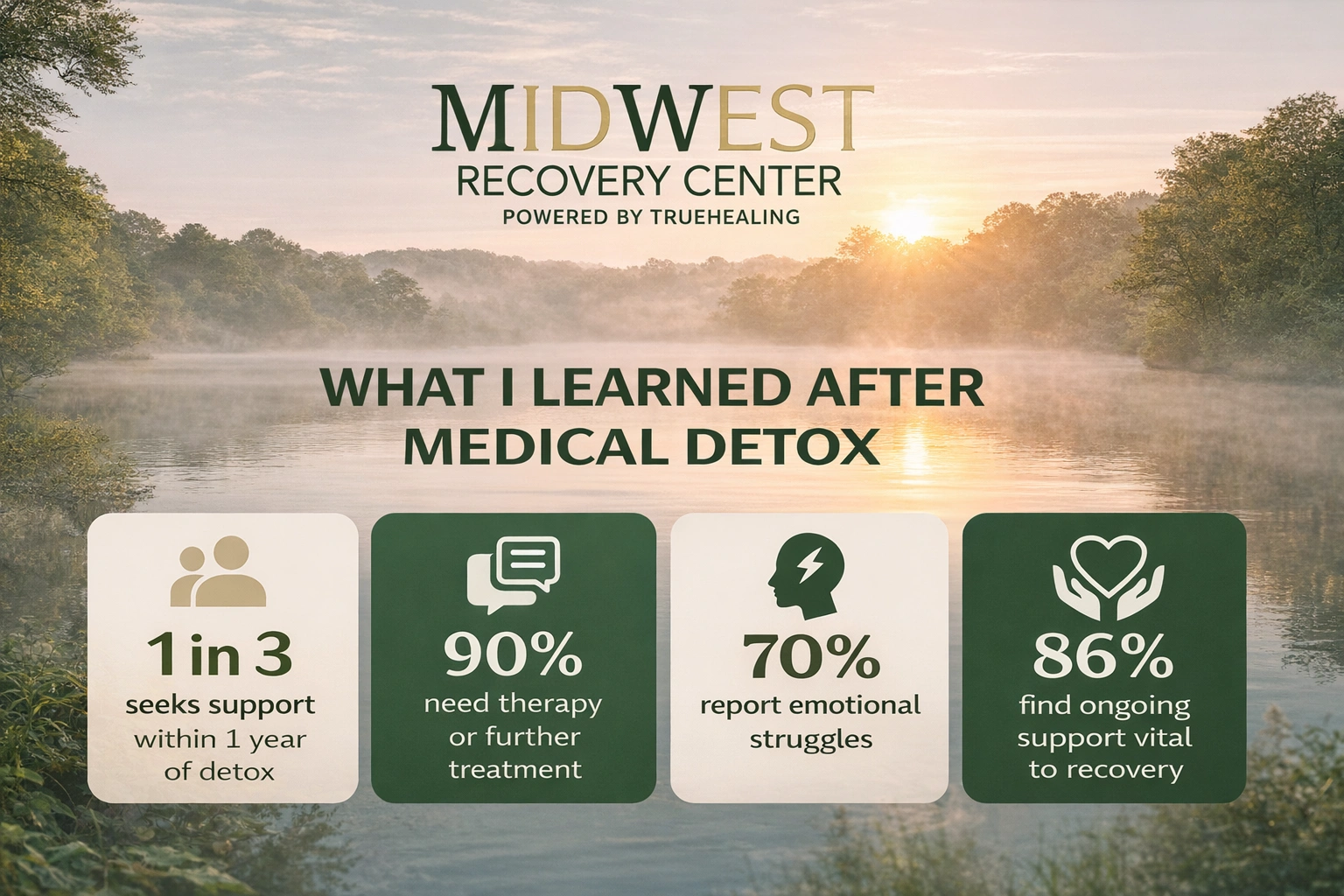
And I wasn’t alone. Every time I opened up in alumni meetings, I heard variations of the same story. People with 6 months, 2 years, even 5 years sober who still hit emotional walls they couldn’t explain.
That’s when I knew I hadn’t done anything wrong. I was just doing the deeper work.
Learning to Want More Than Just “Not Using”
If you’re like me, you probably spent a lot of your early recovery learning how to say “no.” But eventually, that’s not enough. The real healing started when I asked myself what I wanted to say yes to.
Yes to real connection. Yes to feeling my feelings—even when they sucked. Yes to starting over in ways that weren’t dramatic or Instagrammable, but real and grounding.
That started small.
It started with coffee in the morning. With showing up to therapy even when I didn’t know what to say. With texting someone before I hit the red zone, not after.
It looked like learning how to be bored without unraveling. Learning how to celebrate a Tuesday. Learning how to sit across from someone and listen—not to fix them, but just to be there.
What Helped Me Reconnect (That No One Talks About)
Midwest Recovery didn’t just help me detox. They helped me rebuild a rhythm. After the program, I stayed engaged—not because I was afraid I’d relapse, but because I knew I wasn’t done becoming.
And I want to say this clearly: if you’re months or even years out from detox and you still feel disconnected, you are not broken. You are human. Recovery is not linear. Healing is not a light switch.
Sometimes, it’s a slow return to things you forgot how to love. And sometimes, it’s learning to love things you never thought you’d enjoy—like quiet.
For me, part of that reconnection happened in Toledo, Ohio, where I started going to a weekend meditation group. No big slogans. No “you got this!” Just people sitting together, breathing. Being. That hour became a cornerstone. Not because it was flashy—but because it reminded me I didn’t have to perform my healing. I could just be.
And in Maumee, Ohio, I found a part-time job that wasn’t about status or success. It was a job that let me be present, use my hands, and not get swallowed by stress. That kind of stability became a lifeline I didn’t know I needed.
Why This Isn’t a Success Story
I’m not telling this story because I’ve arrived somewhere. I’m telling it because I used to think detox was supposed to be the end. And now I know—it was just the beginning.
Some days I still feel lost. But most days, I don’t feel hollow anymore. I feel grounded. Curious. Present.
And most importantly, I feel like I’m finally meeting myself—not the version that was surviving, but the one who might actually want to live.
Frequently Asked Questions About Medical Detox Programs
What is a medical detox program?
A medical detox program is a structured, supervised process where individuals withdraw from substances in a safe, clinical setting. It often involves medical monitoring, medications to ease withdrawal symptoms, and emotional support during the initial phase of sobriety.
Is detox the same as treatment?
No. Detox is the first step in the recovery process—it clears substances from your body but doesn’t address the emotional, behavioral, or psychological patterns behind addiction. Most people benefit from ongoing treatment after detox, including therapy, support groups, or outpatient programs.
Why didn’t I feel better after detox?
Feeling emotionally flat or disconnected after detox is common. Your body may be clear, but your nervous system and emotional world are still adjusting. This doesn’t mean you failed—it means you’re just beginning to heal at a deeper level.
Can I go back for support even after finishing detox?
Yes. Many detox centers, including Midwest Recovery, offer alumni support and extended care options. You’re never “done” healing—and reaching out again isn’t a setback. It’s a sign of growth.
How do I know if I need detox again?
If you’ve returned to substance use and can’t stop on your own safely, or if withdrawal symptoms are intense or dangerous, medical detox may be necessary again. There’s no shame in needing help more than once. What matters is that you take steps to protect your body and your future.
Call (888) 657-0858 or visit Midwest Recovery’s medical detox program in ohio to learn more. Whether you’re just starting or starting again, you deserve to feel safe, seen, and supported.