
You didn’t plan to disappear.
Maybe you were overwhelmed. Maybe one bad day turned into three, and the shame of vanishing got louder than the voice saying go back. Or maybe you just couldn’t imagine facing anyone after walking away.
Whatever the reason, you left. Mid-program. Maybe mid-week. And now it’s been days… or months. You’ve probably rewritten the text to your case manager five times. You’ve thought about calling but didn’t. You’ve played out the worst-case scenario in your head a hundred different ways:
“They’re going to be mad.”
“I already blew my chance.”
“They won’t let me back in.”
“What if I’m too far gone?”
If that sounds like your internal monologue, stop right here—and take this in:
You can go back. You are still allowed. You are still wanted.
This isn’t about being perfect. It’s about getting honest. You ghosted. Now you’re thinking about coming back. That takes guts. And it’s possible—without judgment, without lectures, and without starting from scratch.
Here’s how.
1. Know That Ghosting Is More Common Than You Think
You might feel like you’re the only one who’s ever walked out mid-treatment. The only one who stopped answering calls. The only one who shut down when things got too real.
You’re not.
Midwest Recovery Center—and most residential programs across the country—see this all the time. Dropping out is part of the process for many people. Not ideal, no. But not disqualifying.
You didn’t fail. You just hit a wall. And recovery is still an option—even from here.
2. You Don’t Need to Have the Perfect Reason
Maybe you left because you weren’t ready. Or maybe things got too emotional, too fast. Maybe you got triggered and ran. Maybe you didn’t even know why you left—you just knew you needed out.
Here’s what matters: You’re thinking about coming back.
You don’t need to write an essay or make excuses. Just be honest about where you’re at now. The team won’t grill you—they’ll guide you. That’s what they’re here for.
And if all you can say is: “I think I need help again”—that’s more than enough.
3. Let Go of the Shame Narrative
It’s easy to let your brain turn your exit into a character flaw. But here’s the truth:
- You are not weak because you left.
- You are not broken because you’re still struggling.
- You are not unwelcome because you ghosted.
The people who work in this field—especially at places like Midwest Recovery—don’t flinch at relapse, resistance, or return clients. In fact, returning shows courage, not failure.
If you were brave enough to leave… you’re brave enough to come back.
4. You Don’t Need to Be Clean to Re-Enter
Some people delay calling back because they think they need to be sober first. But if you’ve been using again, you’re not disqualified. You’re the reason residential care exists.
Midwest Recovery offers medical detox and can help you safely stabilize before stepping back into a structured residential treatment program. You don’t need to fix it alone just to qualify for help.
There’s no “right condition” to return. You come as you are—whether that’s scared, high, hungover, or hurting.
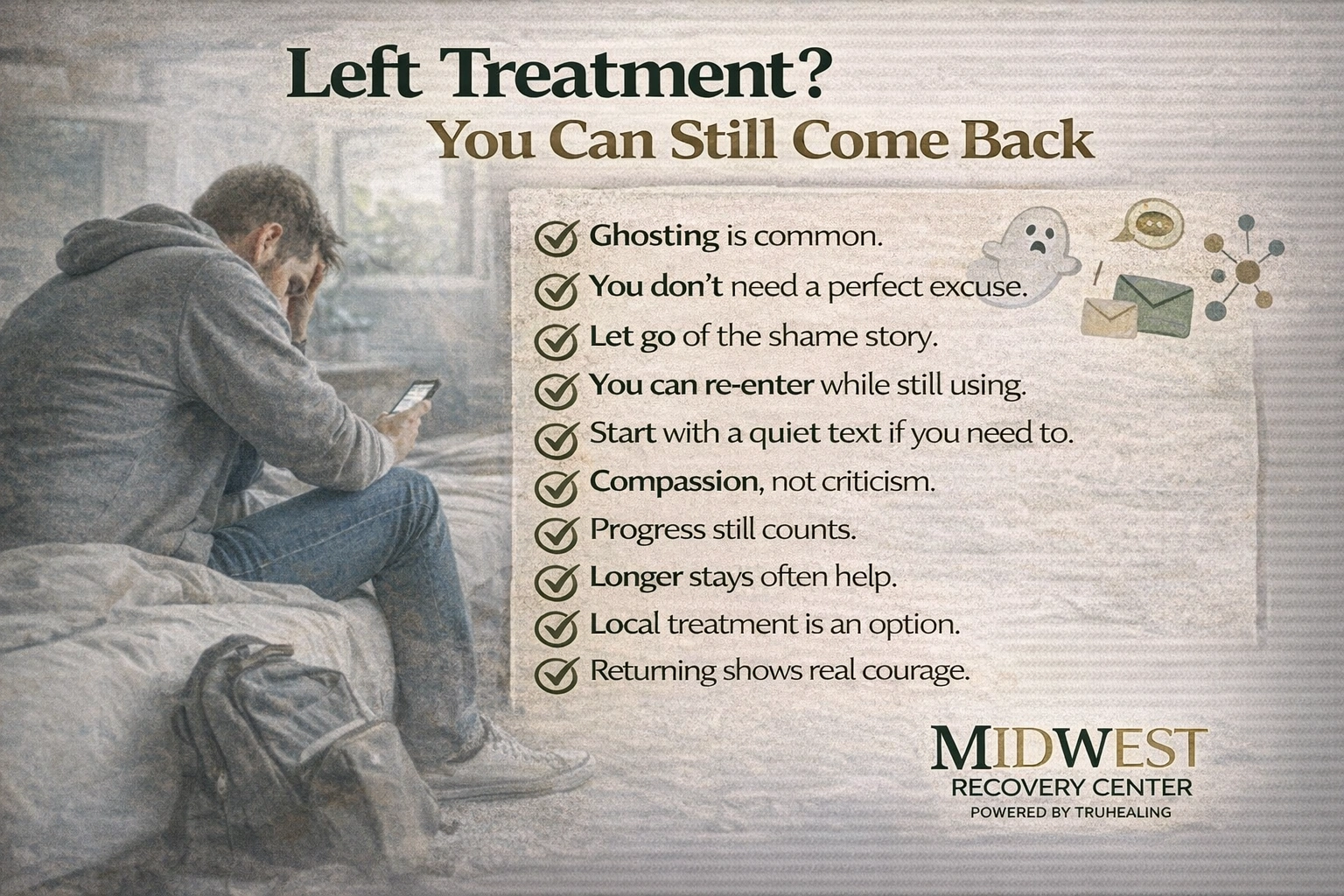
5. Reaching Out Can Be Simple (and Quiet)
You don’t have to make a phone call right away. If speaking out loud feels too intense, start with a text or a contact form.
Something like:
- “Hi. I left before, but I think I need to come back.”
- “I know I ghosted, but is it too late to return?”
- “Can I talk to someone about starting over?”
That’s it. You don’t need a speech. You just need a thread. The admissions or alumni team will take it from there.
You can even reach out through Midwest Recovery Center’s residential program page and get connected quickly—without explaining everything all at once.
6. Expect Compassion, Not Criticism
Most people delay coming back because they think they’ll be met with disappointment or judgment. But ask anyone who’s returned, and they’ll tell you: that fear never happens.
At Midwest Recovery, you’ll be met with:
- Neutral, non-judgmental intake conversations
- A chance to name what didn’t work last time
- New clinical eyes on your treatment plan
- A welcome back—not a scolding
You’re not walking into a courtroom. You’re walking back into care. And that’s something to be proud of.
7. You Might Not Have to Start Over
One huge fear people have is: “If I go back, I’ll lose all the progress I made.” That’s rarely true.
Yes, you may revisit certain steps or clinical goals. But your return plan will be built around your prior work. You’re not being demoted. You’re being re-supported.
In fact, many returning clients tell us their second round of treatment actually felt more focused—because they’d already peeled back some layers. They came in knowing what they needed this time.
8. You’ll Probably Stay Longer (and Do Better)
Most people who return after ghosting stay longer—and get more out of it. Why?
Because the second time isn’t about proving anything. It’s about healing.
You’re less performative. More open. Less in denial. More honest.
That emotional honesty makes the clinical work deeper, not harder.
9. There’s Local Help If You Need It
Sometimes what kept you away wasn’t emotional—it was logistical. Maybe you didn’t have a ride. Maybe the drive felt like too much. Maybe you didn’t want to ask anyone for help getting there.
If that’s the case, know this: Midwest Recovery Center offers care in locations throughout Ohio. Whether you’re near Toledo or need help accessing services from a nearby town, you’re not without options.
In fact, they’ve supported clients from Youngstown and other nearby communities who needed a second chance but couldn’t travel far. Local treatment makes returning feel more doable—and more connected to your real life.
10. Coming Back Means You Still Believe in Yourself
Let’s be real: it’s easier to ghost and stay gone. It’s easier to live in numbness, in “screw it,” in that low-key despair you’ve been carrying.
But if you’re still reading? That means there’s something in you—tiny but strong—that wants more.
Coming back is the bravest thing you’ll do. Not because it’s dramatic. But because it’s quiet, simple, and deeply human.
What Treatment Return Clients Want You to Know
“I was so scared to call. I thought I’d hear ‘Why did you leave?’ But instead, they just said, ‘Thanks for calling. Let’s talk about what you need.’ I sobbed. I didn’t even know how badly I needed to hear that.”
— Returned Client, 2022
“The second time felt different. Not easier. But more honest. I wasn’t pretending anymore. I got real. And this time, it stuck.”
— Alumni, 2023
FAQs: Going Back After Ghosting Treatment
Do I have to detox before coming back?
Only if clinically necessary. You’ll be assessed and guided safely if detox is needed.
Will I get assigned the same therapist?
Maybe, maybe not. If you had a good connection, you might. If not, this is a chance to find a better fit.
Can I bring up what didn’t work last time?
Absolutely. That honesty helps build a better plan.
Will my insurance still cover it?
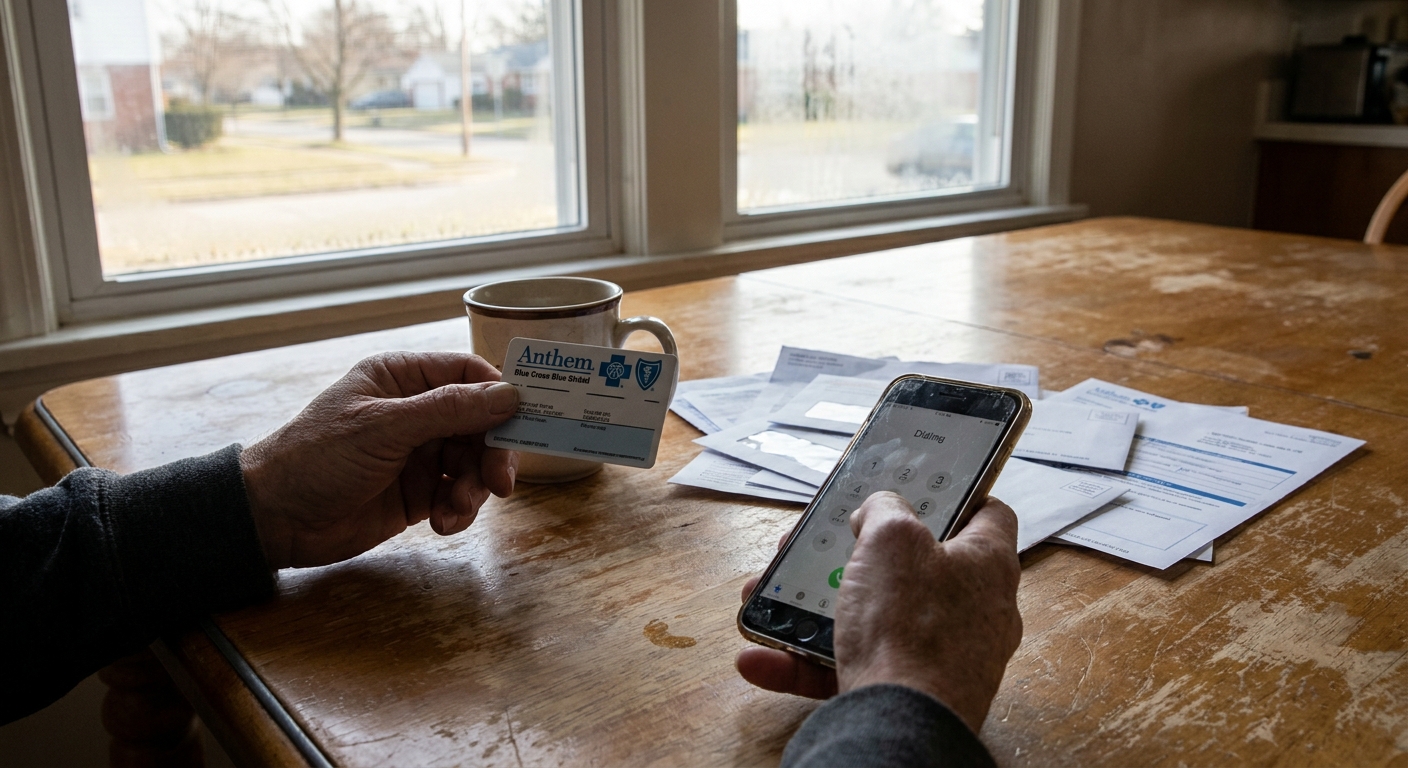
Often, yes. Midwest Recovery’s admissions team can help verify your coverage.
What if my family doesn’t support me coming back?
You can still return. Family involvement is helpful, but not required. Your recovery belongs to you.
You Can Still Come Back—And Be Welcomed, Not Judged
You left. You struggled. Maybe you used. Maybe you hit bottom again. But none of that disqualifies you.
If you’re ready to try again—even if you’re scared, shaky, or unsure—you’re ready enough.
Call (888) 657‑0858 to learn more about our residential treatment program services in Ohio. The door is still open—and we’re still here, holding it for you.