
I was convinced treatment didn’t work.
Not just for me—but in general.
I’d already tried it once. I went in uncomfortable, came out exhausted, and relapsed faster than I expected. So when someone suggested a Medical Detox Program again, my reaction wasn’t fear. It was dismissal.
I already know how this goes.
What I didn’t want to admit—what took me a long time to see—was that my first attempt hadn’t actually shown me what medical detox was meant to do. It showed me the bare minimum. And the bare minimum wasn’t enough to prepare me for anything that came after.
I’m sharing this as a peer. Not someone with perfect insight. Just someone who was wrong in a way that matters.
Why I Was So Certain Treatment “Didn’t Work”
When people say treatment didn’t work for them, it’s usually not casual. It comes from something real.
In my case, the first experience felt mechanical. Show up. Dry out. Leave.
No context. No explanation. No sense that what I was feeling had a reason behind it.
I remember counting hours instead of understanding what was happening. I remember being told I’d feel better “soon,” without anyone defining what better meant. I left detox shaky, mentally foggy, and emotionally raw.
So when things fell apart again, it felt logical to blame treatment. The conclusion was simple and comforting: I tried. It failed. End of story.
Except it wasn’t the full story.
What I Thought Detox Was Supposed to Be
I thought detox was just about getting substances out of your system.
Suffer, stabilize, move on.
I expected discomfort, so I braced for it. I expected no one to really care, so I didn’t ask questions. I expected to be treated like a checklist, so I stayed guarded.
Looking back, that mindset shaped everything. Because when detox is treated like a punishment or a test of endurance, you don’t engage with it—you survive it.
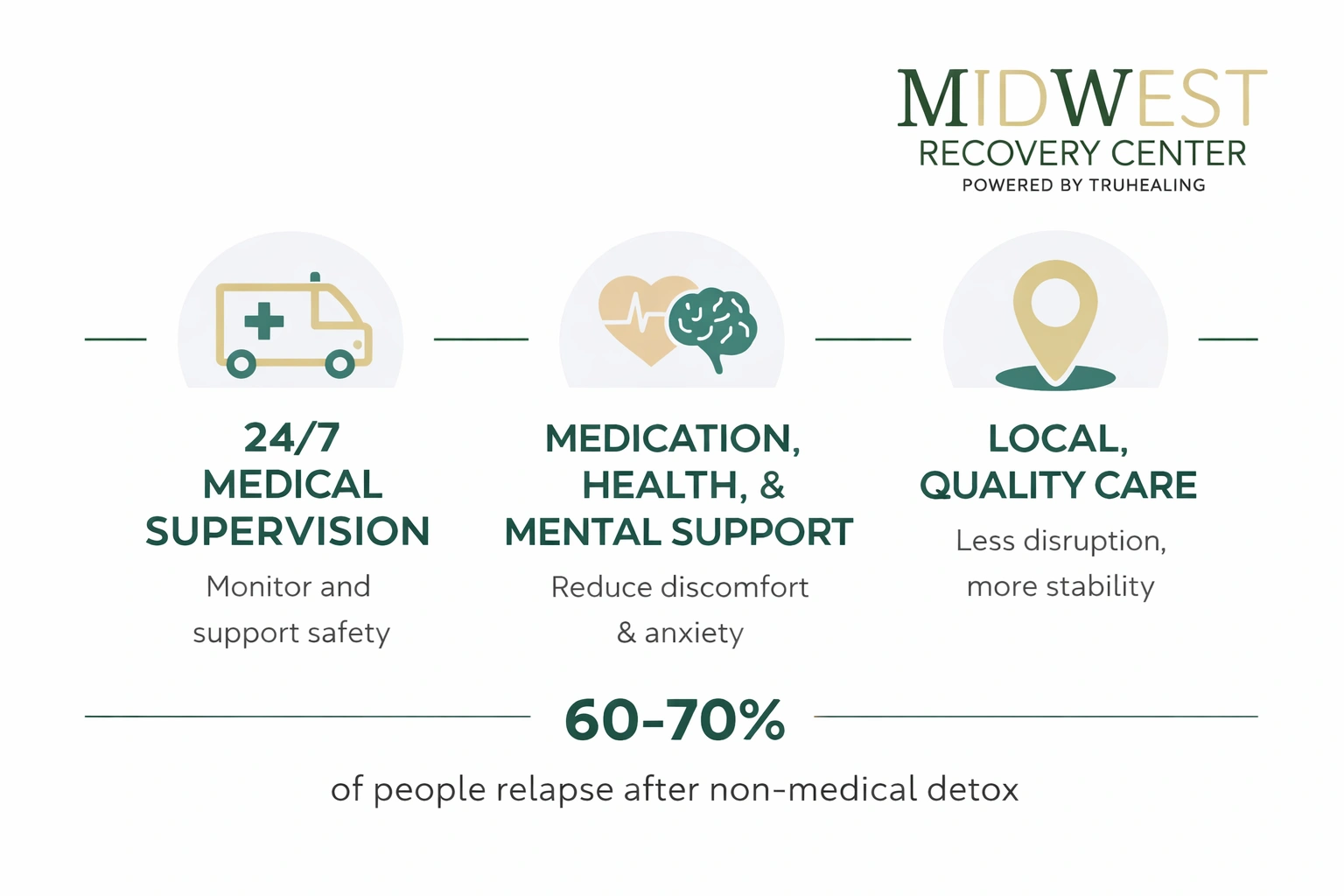
A real Medical Detox Program isn’t built around survival. It’s built around stabilization, education, and reducing the chaos that makes people leave early or give up later.
I didn’t know that then. No one explained it to me.
The Quiet Difference When Detox Is Done Right
The second time, the difference wasn’t dramatic.
It was subtle—and that’s why it mattered.
Symptoms were anticipated instead of reacted to. Staff explained what my body was doing and why. I wasn’t made to feel dramatic for asking questions or weak for feeling anxious.
For the first time, detox didn’t feel like something being done to me. It felt like something being done with me.
That’s what a Medical Detox Program is supposed to offer: enough physical and mental stability that your brain can finally stop panicking long enough to process what’s next.
When that happens, everything downstream changes.
Why White-Knuckling Detox Sets You Up to Fail
Here’s something I wish someone had told me earlier: if detox feels like something you have to power through, it’s not doing its job.
White-knuckling withdrawal teaches your brain one thing—escape as soon as possible. It doesn’t prepare you for therapy, coping, or insight. It prepares you to leave.
In a supportive medical detox, discomfort is managed proactively. Anxiety is addressed before it spirals. Sleep is protected as much as possible.
That doesn’t make detox easy. It makes it effective.
Trust Didn’t Come Back Because Someone “Convinced” Me
I didn’t walk into my second detox believing in the process. I walked in skeptical, defensive, and quietly prepared to be disappointed again.
What surprised me was that no one tried to talk me out of that skepticism. No sales pitch. No inspirational speeches. Just consistency.
Staff showed up when they said they would. Explanations matched experiences. My concerns were taken seriously, even when I didn’t express them well.
Trust didn’t come back because I was persuaded. It came back because the environment earned it.
A good Medical Detox Program understands this: trust is built after safety, not before it.
Why Accessibility and Location Matter More Than People Admit
One thing I didn’t expect to matter was location.
Starting detox close to home changed how I related to it. It didn’t feel like I was disappearing or running away. It felt like I was stepping into care within my real life.
Some people explore options while Looking for Medical Detox Program in Maumee, Ohio because proximity reduces the urge to romanticize leaving or quitting early. It makes detox feel like a decision you’re integrating, not an escape you’re planning.
That groundedness helped me stay present when my instinct was to check out.
Detox Isn’t the Whole Solution—But It Changes the Odds
This was the hardest truth for me to admit: my first attempt didn’t fail because I failed.
It failed because detox wasn’t done in a way that prepared me for what came next.
A Medical Detox Program isn’t meant to fix everything. It’s meant to level the playing field—physically, mentally, emotionally—so you’re not trying to recover while your body and brain are still in survival mode.
When detox is rushed, unsupported, or minimized, everything after it is harder. When it’s done right, it doesn’t guarantee success—but it makes engagement possible.
That difference matters.
What I’d Say to Anyone Who Thinks Treatment Already Failed Them
If you believe treatment didn’t work for you, I won’t argue with you. That belief usually comes from lived experience.
But I will offer this: sometimes what didn’t work wasn’t you or even treatment. It was the level of care you received at the very beginning.
Detox sets the tone. It teaches your nervous system whether help is safe or something to escape. When it’s handled with care, explanation, and respect, the rest of treatment has a chance to land.
That’s the part I didn’t get the first time.
The Role of the Facility Matters More Than I Realized
Not all detox experiences are the same. The environment, the staffing model, and the philosophy behind care make a real difference.
At Midwest Recovery Center, detox isn’t treated as a box to check. It’s treated as a clinical phase that deserves time, attention, and dignity.
That approach changes how people experience withdrawal—and how willing they are to continue care afterward.
I didn’t know to look for that before. Now I know it’s non-negotiable.
Frequently Asked Questions from People Who Think Treatment Didn’t Work
What if I already tried detox and relapsed?
Relapse doesn’t mean detox was pointless. It may mean detox wasn’t supported well enough to prepare you for what followed.
How is a medical detox program different from “just detoxing”?
Medical detox includes monitoring, symptom management, explanation, and emotional support. It’s not just about getting substances out—it’s about stabilizing your system.
What if I don’t trust treatment staff?
You don’t have to trust immediately. Ethical programs understand skepticism and focus on consistency rather than persuasion.
Is medical detox only for severe cases?
No. Detox is appropriate whenever withdrawal risk exists. It’s about safety, not labels or severity.
What if my last detox felt rushed?
That’s common—and it matters. Rushed detox often leaves people physically and emotionally unprepared for next steps.
Can I leave if it feels wrong?
Yes. Ethical programs prioritize informed consent and collaboration. You’re not trapped.
Will detox fix everything this time?
No. Detox isn’t a cure. It’s a foundation. When done well, it gives the rest of treatment a real chance.
A Straightforward Closing
You don’t have to rewrite history to move forward.
You don’t have to pretend your first experience was helpful.
And you don’t have to feel hopeful to take another look.
If treatment “didn’t work” before, it might be worth asking whether you ever received the level of care detox was meant to provide.
A Medical Detox Program done right can feel very different from what you remember—and different enough to matter.
Call (888) 657-0858 to learn more about our Medical Detox Program services in Toledo, Ohio.