
Being young and sober can feel like walking into a party where everyone else got the memo—and you didn’t.
People your age are bonding over drinks, posting stories from bars, and planning weekends that seem built around alcohol. Meanwhile, you’re standing there wondering if choosing sobriety means choosing loneliness. Or boredom. Or a life that feels smaller than the one you imagined.
I’ve been there. And as a peer who’s walked alongside others in the same place—especially through Midwest Recovery Center—I can tell you this: sobriety doesn’t make your life smaller. It just forces you to build it differently.
That’s where a Residential Treatment Program can help. Not by turning you into someone else—but by helping you figure out how to live in a world that still drinks, without drinking being the center of your world.
Below are seven real, lived-in ways residential treatment helps young people build a life that actually works—long after the program ends.
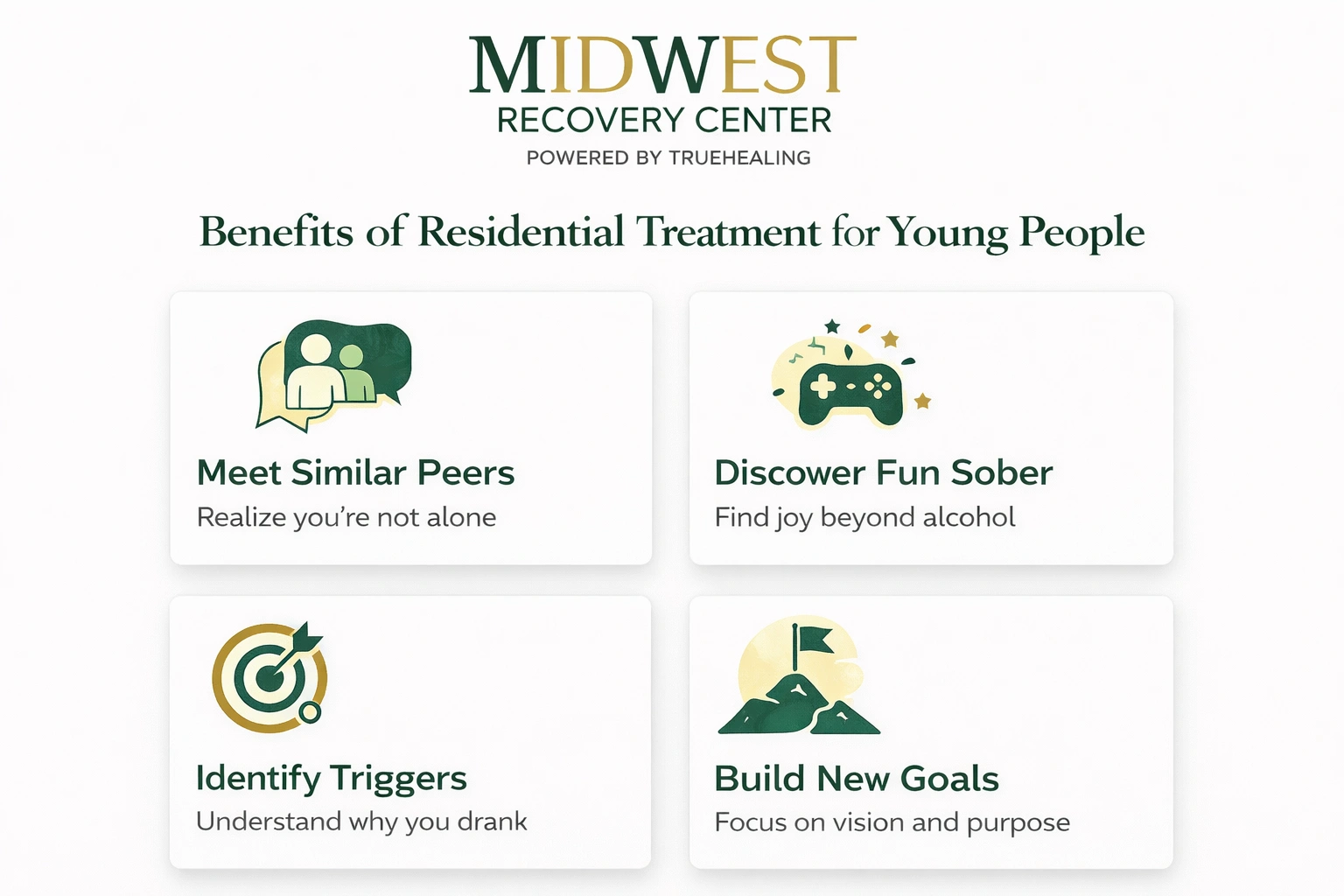
1. It Proves You’re Not the Only “Weird One”
Early sobriety can mess with your sense of belonging. You might feel too young for traditional recovery spaces and too sober for your old social circles.
Residential treatment quietly dismantles that lie.
You meet people your age who are asking the same questions:
- How do I date without drinking?
- What do I do on weekends now?
- Who am I if alcohol isn’t my personality?
That shared awkwardness creates real connection. Not forced positivity. Not “everything happens for a reason” talk. Just honest conversations with people who don’t need convincing.
For many, this is the first time sobriety doesn’t feel isolating—it feels shared.
2. It Helps You Relearn What “Fun” Actually Feels Like
When drinking has been your main social glue, fun can feel impossible without it. Everything else seems flat by comparison.
A Residential Treatment Program doesn’t hand you fake fun or cheesy activities meant to distract you. What it offers instead is something quieter—and more powerful: nervous-system reset.
When your brain isn’t constantly recovering from alcohol, joy starts showing up differently. Laughter feels cleaner. Conversations last longer. You remember things.
At first, it can feel strange—like listening to music without the bass turned up too loud. But eventually, you realize something important: fun didn’t disappear. It just stopped being chemical.
3. It Gives You Structure When Your Identity Feels Unclear
One of the hardest parts of being young and sober is the identity gap.
If drinking was how you relaxed, connected, or felt confident, sobriety can feel like standing in open space with no landmarks. You know where you don’t want to go—but not where you’re headed.
Residential treatment gives your days shape when your sense of self feels blurry. Meals. Groups. Downtime. Reflection. That structure isn’t about control—it’s about stability.
When you don’t have to decide everything at once, you get space to figure out who you actually are. Slowly. Without pressure.
4. It Teaches You How to Be Social Without a Crutch
Let’s be honest: alcohol often did the social heavy lifting.
Without it, conversations can feel awkward. Silence can feel louder. You might worry people won’t like the “real” you.
Residential treatment is one of the safest places to practice sober connection. You learn how to talk when you’re nervous. How to sit in discomfort without escaping it. How to show up as yourself—without numbing first.
Those skills matter far beyond recovery. They help with friendships, work, dating, and self-trust. You don’t just learn how to be sober. You learn how to be present.
5. It Helps You Understand Why Drinking Took Over in the First Place
A Residential Treatment Program isn’t just about removing alcohol. It’s about understanding why it mattered.
For many young people, alcohol:
- Reduced anxiety
- Created confidence
- Filled boredom
- Made social situations easier
Residential treatment helps you unpack that honestly—without shame. Once you understand what alcohol was providing, you can build healthier ways to meet those same needs.
That insight is huge. It turns sobriety from deprivation into strategy. You’re no longer just avoiding alcohol—you’re actively choosing a life that supports you.
6. It Connects You to Support That Extends Into Real Life
One fear young people often have is, What happens when I leave?
Good residential programs don’t treat discharge like a cliff. They help you build continuity—connections, routines, and support that follow you home.
For some, that means staying close to familiar ground while building something new. People often explore care while Looking for Residential Treatment Program in Oregon, Ohio or Looking for Residential Treatment Program in Maumee, Ohio because proximity makes follow-through feel possible.
Recovery doesn’t end when treatment does. It widens.
7. It Helps You Build a Life—Not Just Avoid a Substance
This is the shift that changes everything.
Residential treatment helps you move from What can’t I do anymore? to What do I actually want my life to include? Purpose. Creativity. Relationships. Direction.
Sobriety stops being about restriction and starts being about choice.
Slowly, the “weird one” feeling fades. Not because you blend in—but because you stop needing to. You build a life that feels real enough that alcohol no longer gets to run the show.
What Young People Often Get Wrong About Sobriety
It’s easy to believe sobriety means opting out of normal life. That it’s a consolation prize for people who couldn’t “handle it.”
What residential treatment teaches—over and over—is that sobriety isn’t about losing something. It’s about refusing to organize your entire life around a substance.
You don’t become boring.
You become available.
Available to remember your life. Available to feel it. Available to shape it.
Frequently Asked Questions From Young People in Early Sobriety
Do I have to be “really bad” to go to residential treatment?
No. Many young people enter treatment before things completely fall apart. Curiosity, discomfort, or exhaustion are valid reasons to seek support.
Will I feel out of place because of my age?
Most programs see a wide range of ages, and many young people find it reassuring to meet others navigating sobriety early. You’re not behind—you’re early.
What if I’m scared I won’t have fun anymore?
That fear is common. Residential treatment doesn’t promise constant fun—it helps you rediscover genuine enjoyment that doesn’t cost you the next day.
Is residential treatment just about stopping drinking?
No. It’s about understanding patterns, building coping skills, and creating a life that doesn’t require numbing to feel tolerable.
What if my friends still drink?
Residential treatment helps you figure out boundaries, communication, and new connections—without demanding you abandon everyone you know.
Will people judge me for going to treatment?
Most people won’t know unless you tell them. And many who do know will respect the choice more than you expect.
What if I don’t know who I am without alcohol?
That’s one of the most common reasons young people enter treatment. Discovery—not perfection—is the goal.
A Realistic Closing for the Young and Sober
You might still feel awkward sometimes.
You might still stand out in certain rooms.
You might still miss parts of your old life.
That doesn’t mean sobriety isn’t working. It means you’re building something new.
A Residential Treatment Program doesn’t promise an easy path—but it offers something better: support, structure, and the chance to create a life that doesn’t revolve around drinking.
Call (888) 657-0858 to learn more about our Residential Treatment Program services in Toledo, Ohio.